






What's Happening?
Travis Joseph, President and CEO of the American Forest Resource Council, and Chris Edwards, President of the Oregon Forest Industries Council, are advocating for active forest management practices, including mechanized harvesting and controlled burns,
to mitigate wildfire risks on federal lands. They argue that current federal policies, which often lead to unnaturally overstocked forests and limited access for management, are contributing to catastrophic wildfires. The Grasshopper Fire in the Mt. Hood National Forest is cited as a prime example, where a collaborative project to reduce hazardous fuels was delayed by a lawsuit from an activist group, only for the 'protected' acres to subsequently burn. They contend that while anti-forestry groups have gained influence within the Democratic Party, viewing logging exclusively as an environmental threat, modern science-based forest practices can actively manage forests while protecting the environment. The authors highlight that in Oregon, 2.5 million acres burned, with 92% on public lands, and nearly all catastrophic wildfires in the last decade originated on public lands.
Why It's Important?
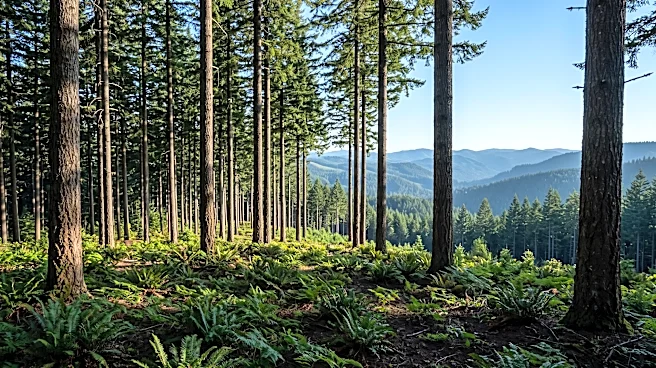
The debate over forest management in the U.S. has significant implications for public safety, environmental health, and economic stability, particularly in fire-prone regions. The current approach, characterized by delays due to litigation and outdated policies, is leading to increased wildfire intensity and frequency, threatening communities, ecosystems, and infrastructure. The economic viability of active management, including timber harvesting, is crucial for funding these efforts and supporting local economies. The call for a shift in policy reflects a growing recognition that a 'suppression-only' strategy is unsustainable and that proactive measures are necessary to create healthier, more resilient forests. This issue also highlights a political divide, with some environmental groups opposing logging, while industry and some conservation groups argue for its necessity in wildfire prevention. The outcome of this debate will shape the future of federal land management and its impact on climate change adaptation and resource allocation.
What's Next?
The proponents of active forest management are urging Democrats to reconsider their stance on logging and embrace modern, science-based practices. They suggest that states like California are already leading by suspending environmental regulations to expedite wildfire mitigation, and Oregon Democrats should consider similar approaches. The focus will likely be on legislative changes that provide public land managers with the necessary tools and access to thin overcrowded forests, reduce hazardous fuels, and respond effectively to wildfires. There will also be continued efforts to counter the influence of anti-forestry groups and foster collaboration among diverse stakeholders, including timber industries, environmental groups, and state agencies. The ongoing threat of wildfires will likely intensify pressure for policy reforms that prioritize proactive management over reactive suppression, potentially leading to new funding mechanisms and revised land-use regulations.
Beyond the Headlines
The underlying tension in U.S. forest management extends beyond immediate wildfire concerns to deeper ethical and cultural dimensions. The perception of 'logging' as inherently destructive, rooted in historical debates, often overshadows its potential role in ecological restoration and wildfire prevention. This ideological divide can hinder the implementation of evidence-based solutions. The legal challenges that delay forest management projects also raise questions about the balance between environmental advocacy and practical land stewardship. Furthermore, the economic aspect of timber harvesting is not just about industry profit but also about creating sustainable revenue streams that can fund essential forest health initiatives. A long-term shift in thinking would involve recognizing forests as dynamic ecosystems that require active, adaptive management, integrating traditional ecological knowledge with modern scientific approaches, and fostering a more nuanced public understanding of forestry practices.