






What's Happening?
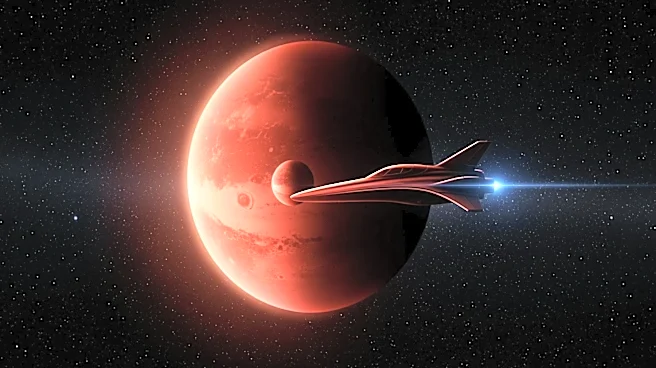
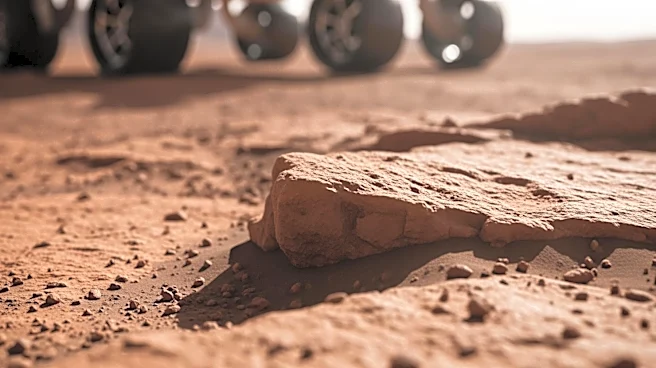
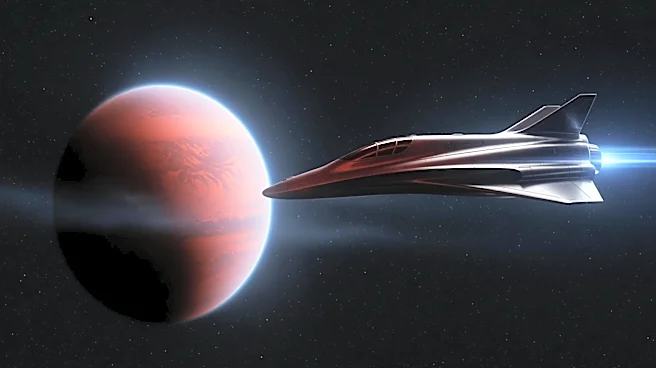
NASA's Psyche spacecraft is set to perform a close flyby of Mars on May 15, 2026, passing just 2,800 miles above the planet's surface at a speed of approximately 12,333 mph. This maneuver is designed to leverage Mars' gravitational pull to increase the spacecraft's
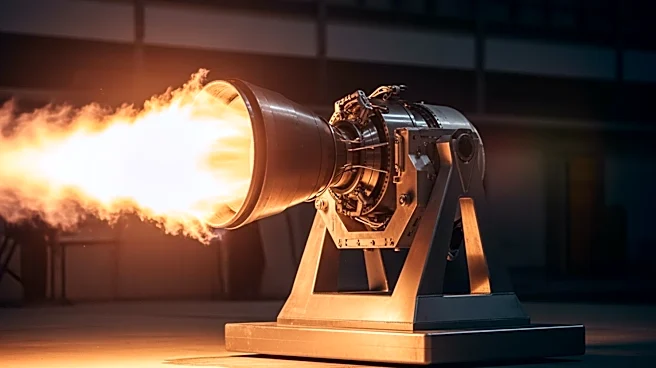
speed and adjust its trajectory, reducing the need for additional propellant as it continues its journey to the metal-rich asteroid Psyche. Launched on October 13, 2023, Psyche employs a solar-electric propulsion system powered by xenon gas. The flyby will also serve as an opportunity to test and calibrate the spacecraft's instruments, including its multispectral imager, which will capture thousands of observations of Mars. These observations will help refine imaging techniques and prepare for operations at the asteroid Psyche, expected to be reached in 2029.
Why It's Important?
The Mars flyby is a critical step in the Psyche mission, allowing NASA to conserve resources while advancing its exploration of the asteroid belt. By using Mars' gravity to boost the spacecraft's speed, NASA can extend the mission's capabilities without additional fuel costs. This approach exemplifies efficient space travel strategies, potentially influencing future missions. The data collected during the flyby will enhance scientific understanding of Mars and improve calibration techniques for space instruments. Additionally, the mission supports broader goals of exploring metal-rich asteroids, which could offer insights into the building blocks of planetary cores and the history of our solar system.
What's Next?
Following the Mars flyby, Psyche will continue its journey towards the asteroid belt, with an expected arrival at the asteroid Psyche in 2029. The mission team will analyze the data collected during the flyby to refine imaging techniques and prepare for the asteroid encounter. NASA's Deep Space Network will monitor the spacecraft's trajectory and speed adjustments, ensuring the mission remains on course. The success of this maneuver could pave the way for similar gravity-assisted strategies in future space missions, potentially reducing costs and extending mission durations.
Beyond the Headlines
The Psyche mission highlights the innovative use of gravitational assists in space exploration, a technique that could become more prevalent as agencies seek cost-effective ways to explore distant celestial bodies. The mission also underscores the importance of international collaboration, with various Mars missions contributing to the flyby event. This cooperation could lead to more integrated approaches in planetary exploration, enhancing scientific outcomes and fostering global partnerships in space research.