
What's Happening?
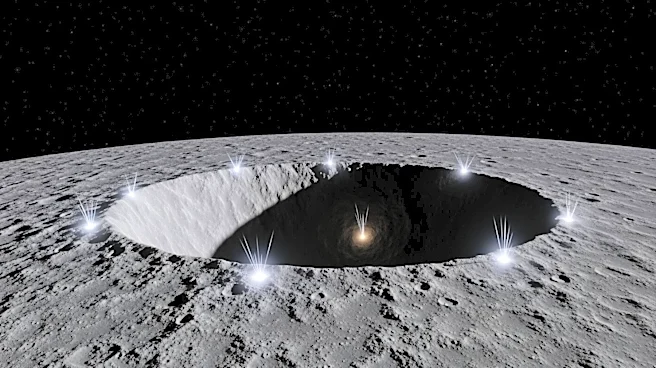
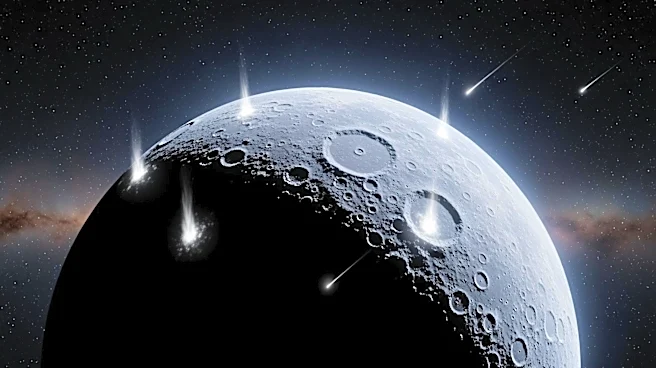
During NASA's Artemis 2 mission, astronauts observed meteoroid impacts on the moon's far side, a phenomenon that has been difficult to capture with cameras. These observations, made with the naked eye,
provide unprecedented insights into the moon's surface and its exposure to cosmic debris. The Artemis 2 crew's findings are significant as they offer a rare glimpse into meteoroid impacts, which are typically fleeting and challenging to document. The mission's observations were particularly valuable because they occurred on the moon's far side, a region not easily visible from Earth, expanding our understanding of lunar impacts.
Why It's Important?
The Artemis 2 mission's observations are crucial for advancing lunar science. By tracking meteoroid impacts, scientists can gain insights into the moon's history and surface dynamics. This information is vital for planning future lunar outposts, such as NASA's Artemis Base Camp, which will require protection from meteoroid strikes. Understanding these impacts will help develop technologies to shield habitats and equipment, ensuring the safety and longevity of lunar missions. The data collected will also be made publicly available, allowing the broader scientific community to analyze and enhance our knowledge of lunar geology.
What's Next?
In the coming months, all data gathered by Artemis 2, including imagery and audio recordings, will be released to the public. This will enable further analysis by scientists and researchers. The insights gained from these observations will inform the design and safety measures for future lunar missions, particularly those planned for the moon's south pole. As researchers refine their understanding of meteoroid impacts, they can develop better protective technologies for lunar habitats, ensuring the success of long-term human presence on the moon.