







What's Happening?
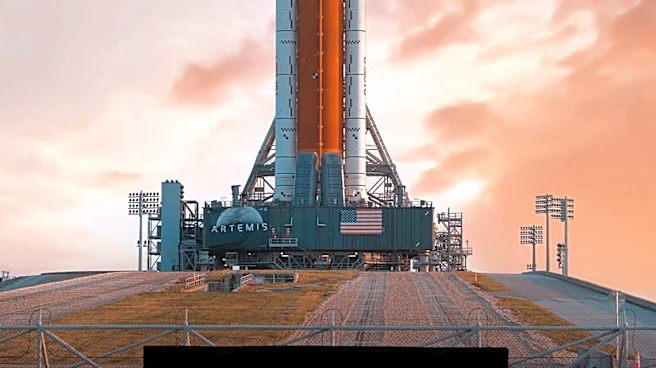
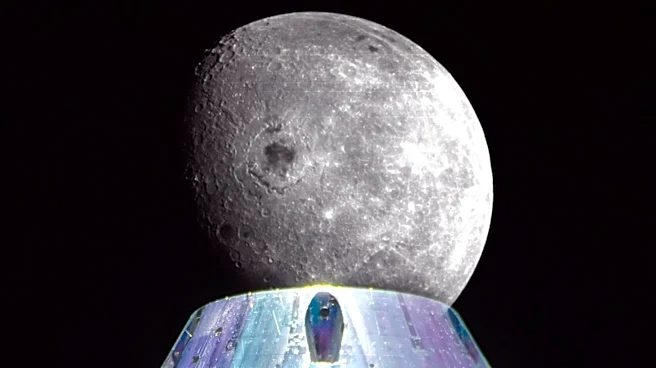
NASA's Artemis program, which aims to return humans to the moon, may inadvertently threaten ancient clues about the origins of life on Earth. A new study highlights concerns that the exhaust from spacecraft landings could contaminate the moon's surface,
particularly the ancient ice in craters near the lunar poles. This ice is believed to contain prebiotic organic molecules from asteroids and comets, which could have played a role in sparking life on Earth. The study, led by Silvio Sinibaldi of the European Space Agency, warns that methane from spacecraft exhaust could quickly spread across the moon's surface, potentially destroying these valuable molecular records. The research underscores the need to balance lunar exploration with the preservation of the moon's historical and scientific value.
Why It's Important?
The potential contamination of the moon's surface by spacecraft exhaust poses significant risks to scientific research. The ancient ice on the moon offers a unique opportunity to study prebiotic molecules that may have contributed to the emergence of life on Earth. If these molecules are destroyed, it could hinder our understanding of life's origins. The study calls attention to the broader implications of space exploration, emphasizing the need for careful planning to avoid damaging irreplaceable scientific resources. This issue is particularly relevant as NASA and other space agencies plan more frequent lunar missions, which could exacerbate the risk of contamination.
What's Next?
To mitigate the risk of contamination, researchers suggest selecting colder landing sites to slow the spread of methane. Further simulations are needed to understand how exhaust compounds travel on the moon and to assess the risks posed by other materials used in lunar missions. As space agencies continue to plan for future lunar exploration, they must consider strategies to protect the moon's environment. This includes developing regulations similar to those that protect Earth's sensitive environments, such as Antarctica. Balancing the goals of lunar exploration with the preservation of the moon's scientific value will be crucial as humanity moves closer to establishing a long-term presence on the lunar surface.