

What's Happening?
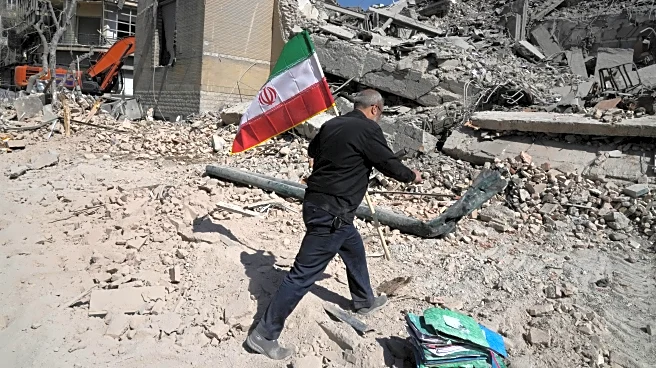
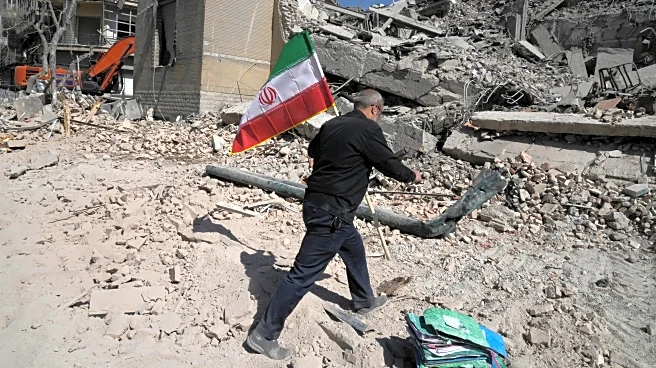
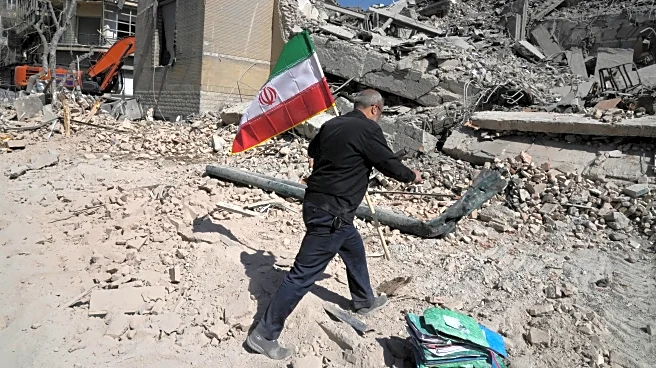
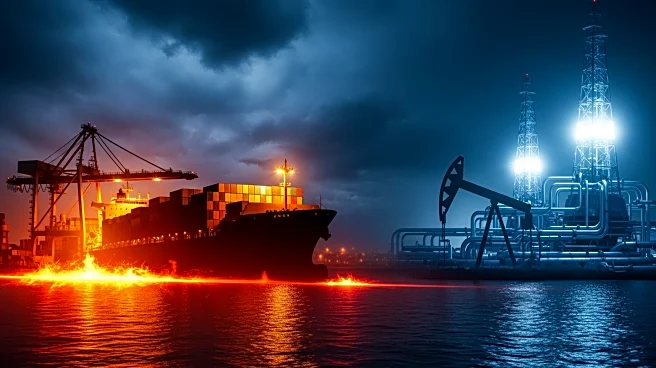
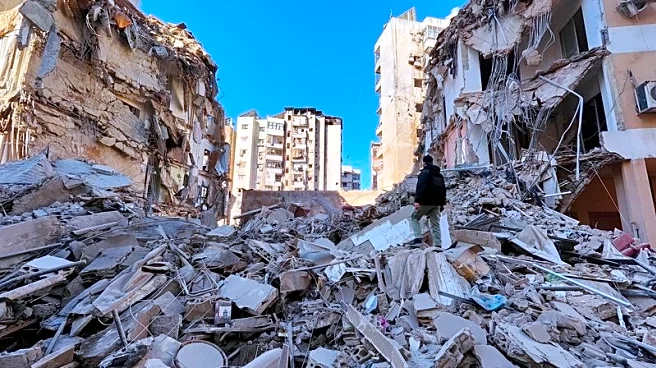
The United States and Israel have launched joint military strikes on Iran, aiming to halt its nuclear weapons development. This action has led to significant disruptions in global logistics and supply chains, particularly affecting shipping lanes in the
Middle East. The closure of the Strait of Hormuz, a critical passage for global oil and gas shipments, is expected to cause higher energy prices and restricted shipping routes. The conflict has also impacted the Red Sea and Suez Canal shipping traffic, which had been recovering from previous disruptions. Industry experts warn that these developments could lead to prolonged elevated ocean container rates and increased air freight costs as shippers seek alternative routes.
Why It's Important?
The closure of the Strait of Hormuz is particularly critical as it handles about 20% of global petroleum liquids consumption and a third of globally traded seaborne crude oil. Countries like India, China, and Japan, which heavily rely on oil imports from the Gulf region, are expected to face significant economic impacts. The disruption in maritime corridors is likely to push container rates higher and increase air freight demand, affecting global trade costs. While the direct economic impact on U.S. and European markets may be limited, the broader implications for global energy prices and supply chain stability are substantial.
What's Next?
The ongoing conflict and its impact on shipping routes may lead to further geopolitical tensions and economic instability. Shipping companies are on high alert, with some already reversing decisions to return services to the Red Sea due to security concerns. If the situation escalates, it could lead to a more significant shift in global trade routes and further increase in transportation costs. Stakeholders in the logistics and energy sectors will need to closely monitor developments and adjust their strategies accordingly.
Beyond the Headlines
The conflict highlights the vulnerability of global trade to geopolitical tensions and the potential for the 'weaponization' of trade routes. The reliance on critical maritime passages like the Strait of Hormuz underscores the need for diversified energy sources and more resilient supply chains. The situation also raises questions about the long-term stability of the Middle East and its impact on global economic dynamics.