
What's Happening?
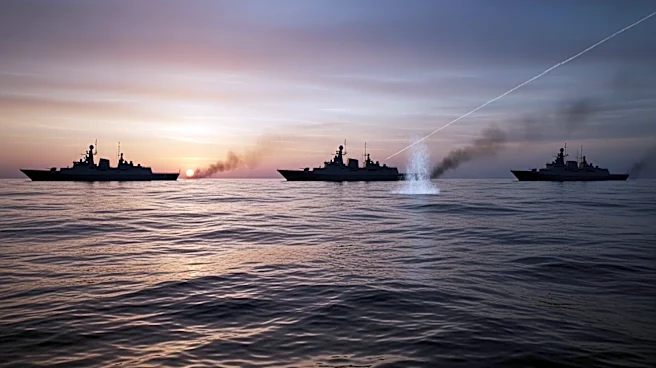
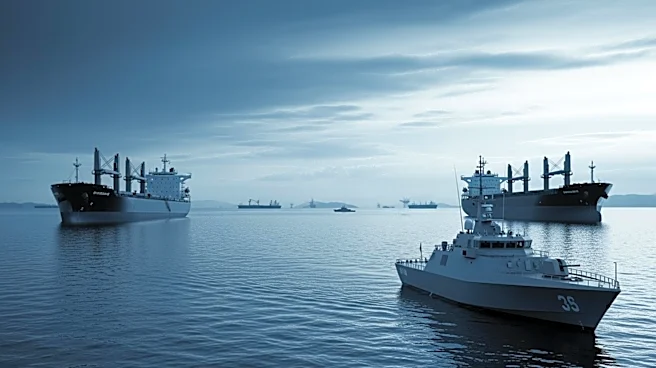
Iran has released a video showing its Islamic Revolutionary Guard Corps (IRGC) commandos seizing two cargo vessels in the Strait of Hormuz. The vessels, identified as the Panama-flagged MSC Francesca and the Liberia-flagged
Epaminondas, were reportedly boarded by masked and armed soldiers. The IRGC accused the ships of operating without the necessary permits and tampering with navigation systems. The incident occurred shortly after a cease-fire extension between the U.S. and Iran. The UK Maritime Trade Operations reported damage to the Epaminondas' bridge due to gunfire and grenades. Panama condemned the seizure as illegal, citing it as a threat to maritime security.
Why It's Important?
The seizure of these vessels highlights ongoing tensions in the Strait of Hormuz, a critical maritime route for global oil shipments. This action by Iran could escalate tensions with Western nations, particularly the U.S., which has been involved in maintaining security in the region. The incident underscores the fragile nature of the current cease-fire and the potential for further conflict. It also raises concerns about the safety of international shipping lanes and the potential impact on global oil prices. The U.S. has not deemed the cease-fire violated, but the situation remains delicate.
What's Next?
The U.S. and Iran are expected to engage in a second round of peace talks in Islamabad, Pakistan, although Iran has not yet committed to these negotiations. The U.S. has called for a unified plan from Tehran to proceed with talks. The international community will likely monitor the situation closely, as further escalations could disrupt maritime trade and impact global markets. The outcome of the upcoming negotiations could determine the future stability of the region.