






What's Happening?
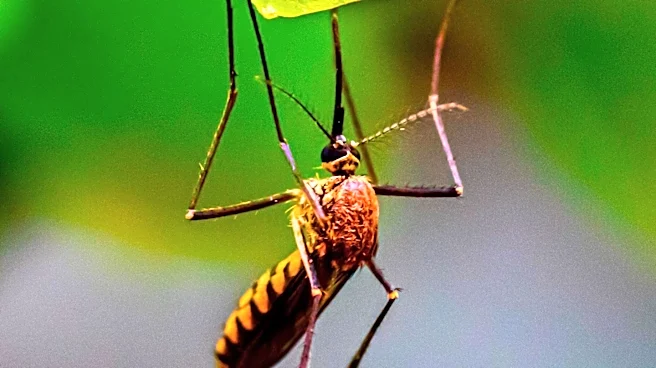
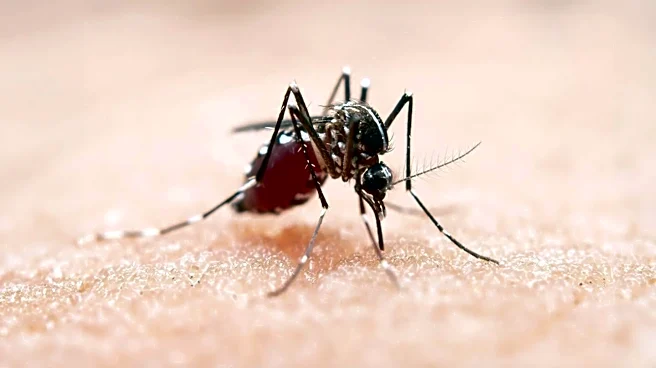
Climate change is significantly impacting the thermal environments experienced by mosquito vectors during their development, leading to morphological adaptations. A systematic review, following the PRISMA 2020 reporting framework, synthesized evidence
on these climate-associated morphological changes, specifically focusing on mosquito body size and wing morphology. The review, which included 24 sources after screening, found that warmer developmental conditions generally resulted in reduced adult body or wing size in mosquitoes. However, the responses varied depending on the species, population, and nutritional environment. These morphological changes have implications for vectorial capacity, geographic distribution, and the dynamics of disease transmission. The study highlights that while smaller mosquitoes might exhibit increased feeding frequency, larger mosquitoes could show greater competence per infectious bite in certain experimental systems. Temperature also affected adult survival and extrinsic incubation in non-linear ways, making the overall directional effect on transmission complex and not uniformly predictable.
Why It's Important?
The morphological changes in mosquito vectors due to climate change have critical implications for public health in the U.S. and globally. Mosquitoes are primary vectors for diseases such as dengue, malaria, and Zika. Alterations in their body size and wing morphology can affect their ability to transmit pathogens, their geographic spread, and their survival rates. This could lead to shifts in the prevalence and distribution of vector-borne diseases, potentially introducing new health challenges to regions previously unaffected or increasing the burden in endemic areas. Understanding these adaptations is crucial for developing effective public health strategies, including vector control programs and disease surveillance. The non-linear effects of temperature on mosquito survival and pathogen incubation mean that predicting disease outbreaks becomes more complex, requiring more sophisticated models and adaptive responses from health systems. The findings underscore the need for continuous monitoring and research into how climate change influences disease vectors to protect communities.
What's Next?
Future efforts will need to focus on integrating these findings into predictive models for vector-borne disease outbreaks. The systematic review suggests that wing geometric morphometrics could serve as a useful supplementary surveillance measure once locally validated. This implies a need for further research and development in this area to establish standardized methods for using morphological data in disease prediction. Public health organizations and research institutions will likely need to collaborate to monitor mosquito populations more closely, track morphological changes, and assess their impact on disease transmission. Furthermore, the complexity of the net effect on pathogen transmission, which is contingent on factors like biting frequency, vector competence, survival, development, extrinsic incubation, and local ecological conditions, necessitates a multi-faceted approach to disease control. This could involve adapting existing vector control strategies and developing new ones that account for climate-driven changes in mosquito biology.
Beyond the Headlines
The study's findings point to a deeper, less obvious implication: the subtle yet profound ways climate change can alter biological systems at a fundamental level, with cascading effects on human health. The morphological adaptations in mosquitoes are an example of phenotypic plasticity, where organisms adjust their traits in response to environmental changes. This highlights the intricate link between climate, ecology, and epidemiology. The challenge extends beyond simply controlling mosquito populations; it involves understanding and anticipating evolutionary and physiological shifts in vectors. This necessitates a 'One Health' approach, integrating human health, animal health, and environmental health to address complex issues like climate-linked vector diseases. The long-term shift could involve a continuous arms race between human intervention and vector adaptation, requiring sustained investment in research, surveillance, and adaptive public health policies to mitigate the evolving threat of vector-borne diseases in a changing climate.