




What's Happening?
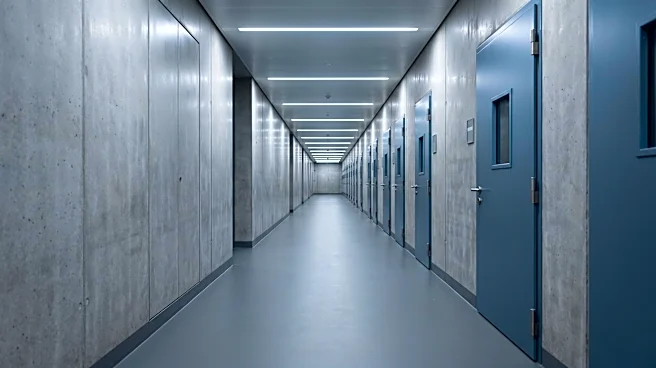
The Steuben County Correctional Facility in upstate New York is facing significant challenges, primarily concerning mental health care and overcrowding. The facility, which houses up to 250 individuals, often operates above its designed capacity, straining
resources and impacting the quality of care. A substantial portion of the incarcerated population struggles with substance use disorders, mental health issues, or both. Sheriff James C. VanBuren has noted that the jail frequently functions as the county's largest mental health facility, a role for which it is ill-equipped. While the facility utilizes contracted mental health professionals and telemedicine services to address this gap, resource limitations remain a constant reality. The daily operations involve strict security protocols, classification procedures, and health services, all managed by correctional officers and support staff in a high-stress environment.
Why It's Important?
The situation at the Steuben County Correctional Facility reflects a broader national issue where correctional facilities, particularly in rural areas, have become de facto mental health institutions. This trend highlights a systemic failure to adequately address mental health and substance abuse issues within communities, leading to their criminalization. Overcrowding exacerbates these problems, creating an environment that is detrimental to both inmates and staff, and hindering rehabilitation efforts. The reliance on telemedicine, while a necessary stopgap, underscores the inadequacy of direct mental health resources. This scenario impacts public safety, as individuals with untreated conditions are more likely to re-offend upon release. It also places an immense burden on local budgets and correctional staff, who are often not trained to manage complex mental health needs, ultimately affecting the well-being of vulnerable populations and the effectiveness of the justice system.
What's Next?
The future of the Steuben County Correctional Facility is subject to ongoing public dialogue and policy debates, with proposals for reform focusing on diversion programs. These programs aim to redirect individuals with mental illness or substance abuse issues from incarceration towards appropriate treatment services. Other proposed solutions include renovating existing infrastructure to improve conditions and expanding alternative sentencing options for low-level offenders. The facility is also working to expand reentry programs, which connect individuals with identification, employment assistance, substance abuse treatment, and housing support to reduce recidivism. Oversight through state and federal regulations, regular inspections, and increased transparency regarding incidents and medical care are crucial for maintaining public trust and ensuring accountability. The success of these initiatives will depend on sustained funding, inter-agency collaboration, and a shift in policy towards a more integrated approach to public health and criminal justice.
Beyond the Headlines
The challenges faced by the Steuben County Correctional Facility underscore a deeper societal issue: the intersection of public safety, public health, and social welfare. The criminal justice system is increasingly tasked with managing complex social problems that extend beyond its original mandate, particularly in rural communities where resources are often scarce. The reliance on jails to house individuals with mental health and substance abuse issues points to a critical gap in community-based support systems. This situation raises ethical questions about the appropriateness of incarceration for individuals who primarily need medical and therapeutic intervention. Long-term solutions require a fundamental reevaluation of how society addresses mental health and addiction, advocating for greater investment in preventative care, community mental health services, and diversion programs that offer alternatives to incarceration. The evolution of facilities like Steuben County's will be a measure of society's commitment to both security and humanity.