






What's Happening?
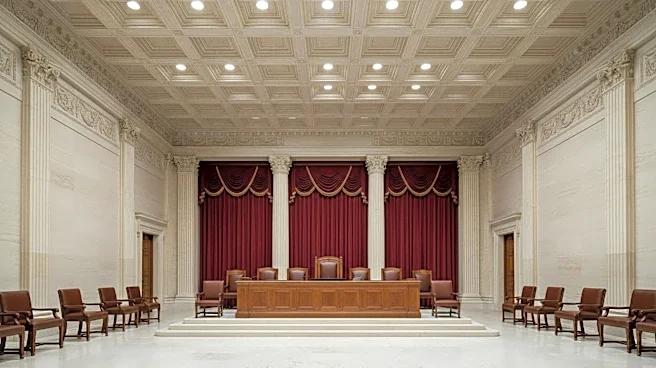
A new article published in SCOTUSBlog suggests that the Chief Justice of the Supreme Court should delegate much of his power to the associate justices. The proposal, authored by Josh Blackman, argues that all justices should play an equal role in guiding
the Court's future. Specifically, it recommends that the Chief Justice delegate presiding duties for oral arguments and private conferences to his colleagues. The article outlines various methods for this delegation, such as justices drawing numbers from a hat annually to select a presiding justice for a term, or rotating the presiding role for each sitting during a given term. A key aspect of this reform is allowing more justices to assign majority opinions, which would diversify the trajectory of the Court's rulings and prevent any single justice from disproportionately influencing the Court's agenda.
Why It's Important?
This proposal for Supreme Court reform is significant because it addresses the concentration of power within the Chief Justice's role, a unique aspect of the U.S. judicial system. By suggesting a more equitable distribution of responsibilities, the reform aims to foster greater trust and collaboration among the justices, potentially leading to more diverse legal perspectives in opinion assignments and conference discussions. The current system, where the Chief Justice presides over arguments and assigns opinions when in the majority, grants considerable influence over the Court's direction. Shifting this power could alter the ideological balance of the Court's output, making it less susceptible to the individual leanings of a single Chief Justice. This discussion is particularly relevant in an era of heightened scrutiny over judicial independence and the perceived politicization of the Supreme Court.
What's Next?
While this proposal is currently a theoretical discussion presented in SCOTUSBlog, its publication in a prominent legal forum could spark broader conversations among legal scholars, policymakers, and the public regarding Supreme Court reform. The implementation of such changes would require significant internal agreement among the justices, as these are largely matters of Court tradition and internal operating procedures rather than legislative mandates. Should the idea gain traction, it could lead to informal discussions within the Court or even formal proposals for rule changes. However, given the Court's historical adherence to tradition, any immediate or drastic changes are unlikely. The ongoing debate about the Chief Justice's power will likely continue to be a point of interest in discussions about judicial governance and the future of the Supreme Court.
Beyond the Headlines
The suggestion to redistribute the Chief Justice's power touches upon fundamental questions about institutional design and leadership within the judiciary. The unique tradition of the president nominating the Chief Justice, who then holds significant administrative and agenda-setting authority, contrasts with many other high courts globally where leadership roles might be more rotational or less centralized. This proposal implicitly critiques the potential for a single individual to exert undue influence over the Court's jurisprudence and internal dynamics. By advocating for shared leadership, the article highlights a desire for a more collegial and potentially less ideologically driven Court. This discussion could also prompt a re-evaluation of the historical justifications for the Chief Justice's extensive powers and whether those justifications remain relevant in the context of a modern, diverse, and often politically polarized judiciary.