
What's Happening?
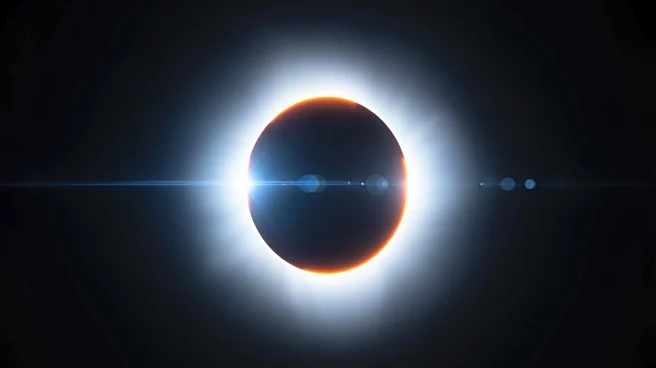
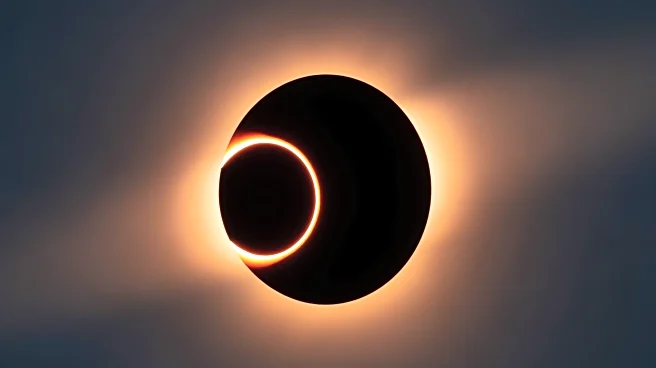
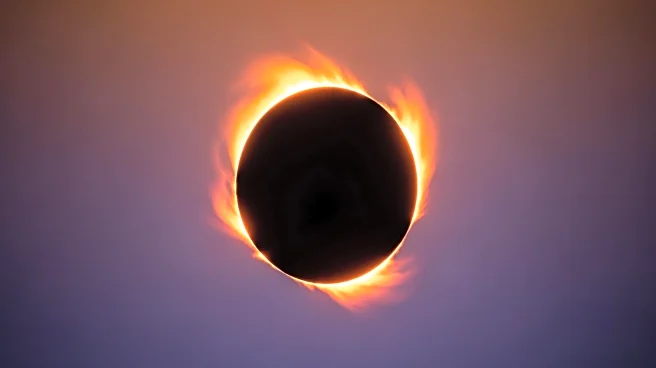
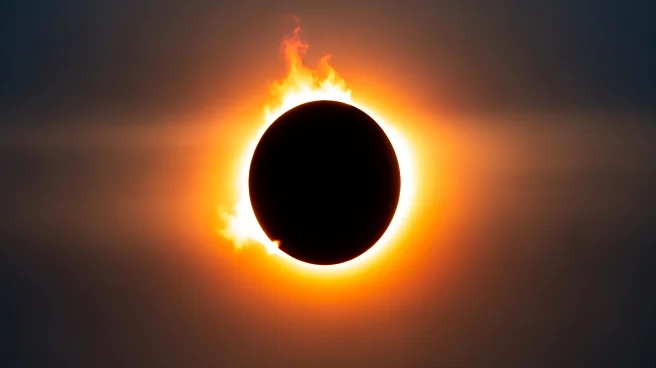
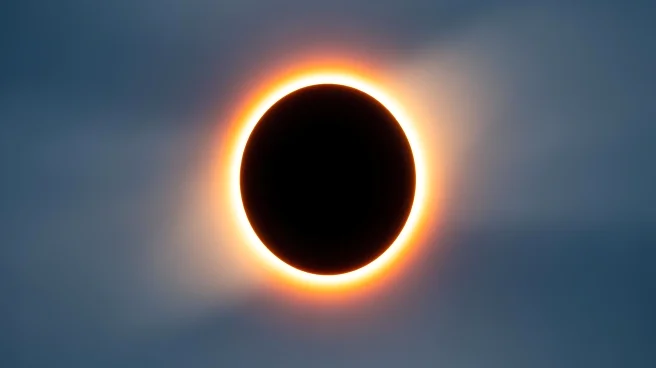
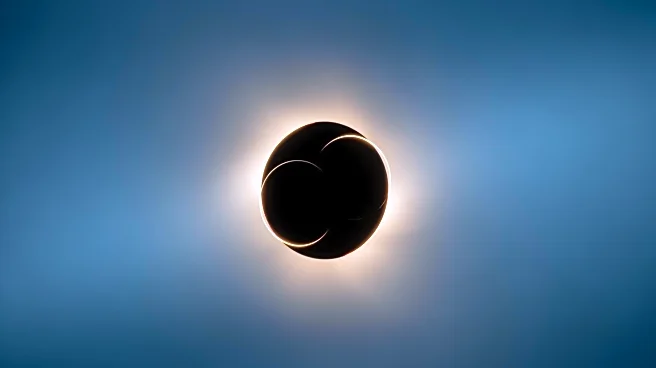
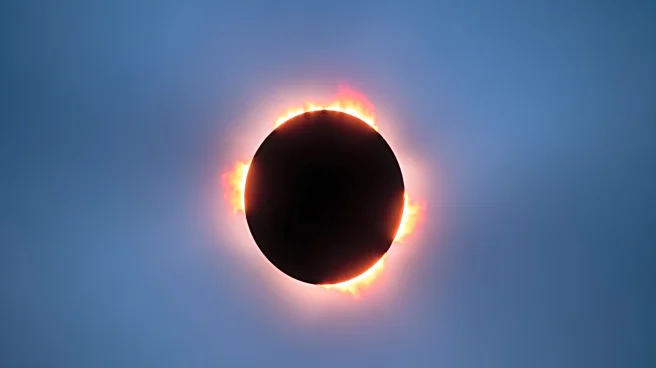
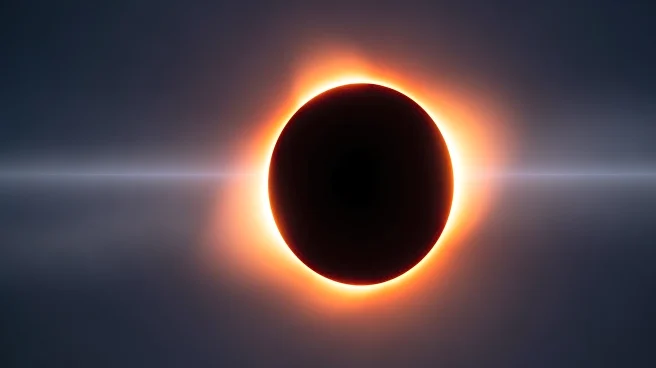
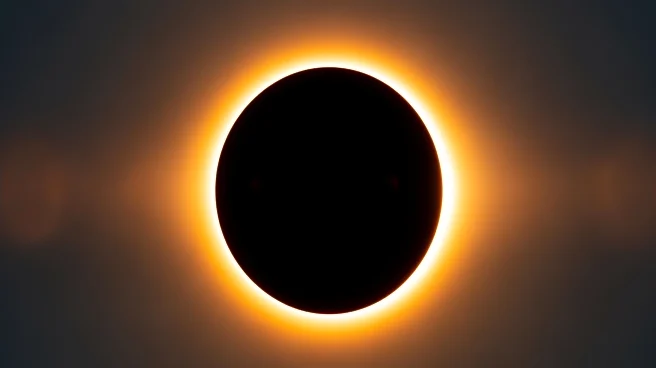
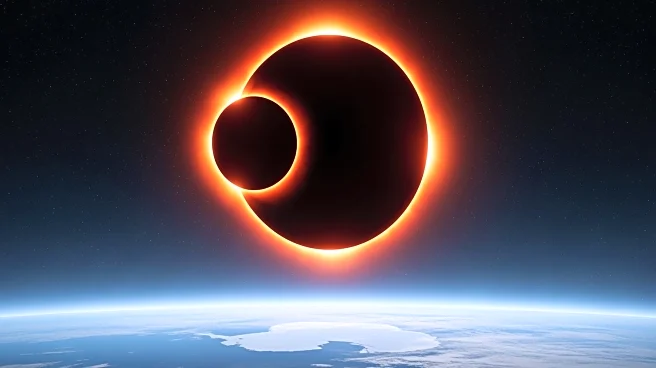
An annular solar eclipse, known as a 'ring of fire,' will occur on February 17, 2026. The eclipse will be visible as a partial eclipse from parts of Antarctica, southern Africa, and southernmost South America. The event will last up to 2 minutes and 20 seconds
at its peak, with the moon covering about 96% of the sun's disk. Observers are advised to use proper solar filters to safely view the eclipse.
Why It's Important?
Solar eclipses provide unique opportunities for scientific observation and public engagement. They allow scientists to study solar phenomena and contribute to our understanding of the sun's behavior. For the public, eclipses are awe-inspiring events that can spark interest in astronomy and science education. The rarity of such events makes them highly anticipated by both scientists and enthusiasts.
What's Next?
Following the February 17 eclipse, the next solar eclipse will be a total solar eclipse on August 12, 2026, visible from parts of Greenland, Iceland, and northern Spain. Scientists and eclipse chasers will continue to prepare for these events, ensuring that they can capture valuable data and provide educational outreach to the public.
Beyond the Headlines
Eclipses have historically held cultural and scientific significance, often seen as omens or opportunities for discovery. In modern times, they continue to captivate audiences worldwide, highlighting the interconnectedness of celestial bodies and the importance of scientific exploration. The study of eclipses can also inform our understanding of planetary transits and the search for exoplanets.