









What's Happening?
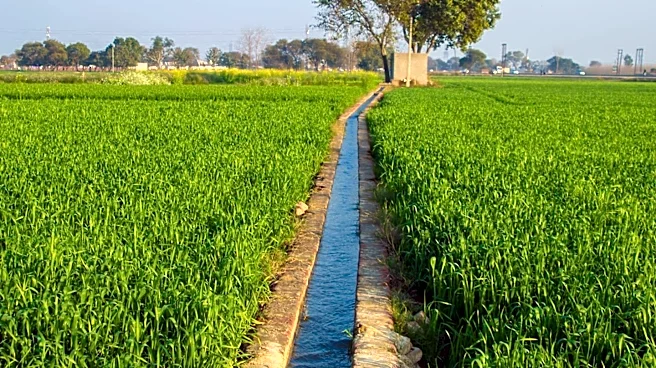
In Mangsebung Rural Municipality-2, Malbanse, farmers have experienced a significant improvement in their agricultural practices due to the construction of concrete irrigation canals under the Small Irrigation Program. This initiative, supported by the Swiss
government, has alleviated the reliance on rain-fed agriculture, which has historically been a challenge for local farmers. The program has facilitated the construction of several irrigation schemes, including the Twanagre-Balbanse canal, which has brought water to previously barren fields. The expansion of irrigation facilities has directly benefited over 500 households, covering approximately four thousand ropanis of land. The project aims to increase agricultural productivity and provide employment opportunities by attracting youth to the agricultural sector.
Why It's Important?
The expansion of irrigation facilities in Mangsebung is crucial for enhancing food security and economic stability in the region. By reducing dependency on unpredictable rainfall, farmers can now cultivate a variety of crops, including paddy, maize, and vegetables, more reliably. This development not only boosts local food production but also contributes to the commercialization of agriculture, potentially increasing income for local farmers. The involvement of multiple government levels and the Swiss government highlights the importance of international cooperation in addressing agricultural challenges. The success of this program could serve as a model for similar initiatives in other regions facing drought and water scarcity.
What's Next?
With the irrigation infrastructure in place, the focus will likely shift to maintaining and promoting these projects to ensure their sustainability. Local communities and consumers are encouraged to engage in conservation efforts to prolong the benefits of the irrigation schemes. Additionally, there may be further initiatives to expand the program to other areas, enhancing regional agricultural productivity. Monitoring the impact on local employment and income levels will be essential to assess the program's long-term success.
Beyond the Headlines
The irrigation expansion in Mangsebung also has broader implications for regional development. By stabilizing agricultural output, the program can contribute to reducing rural poverty and mitigating the impacts of climate change. The initiative underscores the potential of collaborative efforts between local governments and international partners in addressing environmental and economic challenges. Furthermore, the program's success could inspire similar projects in other drought-prone areas, promoting sustainable agricultural practices and resilience against climate variability.