





What's Happening?
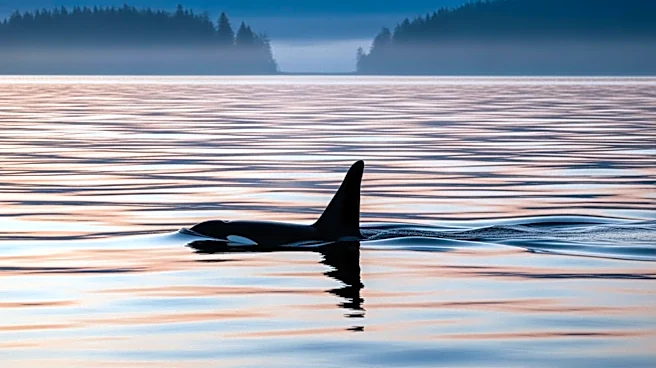
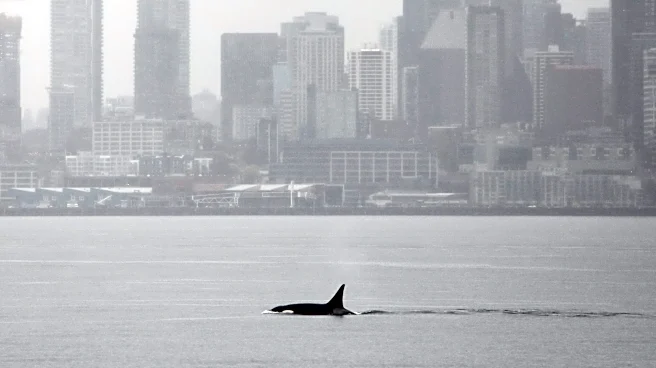
A pod of killer whales, previously unrecorded in the Seattle area, has been spotted near downtown Seattle, delighting whale watchers and researchers alike. The pod, consisting of an adult female and her two offspring, was first seen in Vancouver, British
Columbia, and has been designated as T419, T420, and T421. These orcas are transient, as indicated by their circular scars from cookie-cutter sharks, suggesting they have spent time in the open ocean. Researchers believe the pod may originate from Alaska, possibly the Aleutian region, due to their appearance and the wide-ranging habits of some Alaskan populations. The pod feeds on sea mammals, unlike the local salmon-eating resident orcas, and has quickly become a favorite among observers.
Why It's Important?
The appearance of this pod of killer whales in Seattle is significant for several reasons. It highlights the dynamic nature of marine life and the potential for new interactions between different orca populations. The presence of transient orcas, which feed on sea mammals, could impact local marine ecosystems, particularly the populations of harbor seals, sea lions, and porpoises in the Salish Sea. Additionally, the event underscores the importance of ongoing research and monitoring of marine life, as it provides valuable insights into the migratory patterns and behaviors of these animals. The public interest generated by the pod's visits also emphasizes the role of wildlife in fostering community engagement and awareness about marine conservation.
What's Next?
Researchers will continue to monitor the pod's movements and interactions with the local marine environment. Further studies may be conducted to confirm the pod's origin and understand the implications of their presence in the region. The Orca Conservancy and other marine organizations may use this opportunity to educate the public about the differences between transient and resident orcas and the importance of protecting marine habitats. Additionally, the pod's popularity among whale watchers could lead to increased tourism and interest in marine wildlife tours in the Seattle area.
Beyond the Headlines
The unexpected visit of these orcas to Seattle raises questions about the broader impacts of climate change and environmental shifts on marine life. Changes in ocean temperatures and food availability could be influencing the migratory patterns of orcas and other marine species. This event also highlights the interconnectedness of marine ecosystems across vast distances, as orcas from Alaska are now interacting with the local environment in Washington. The scars from cookie-cutter sharks serve as a reminder of the diverse challenges faced by marine animals in the open ocean.