








What's Happening?
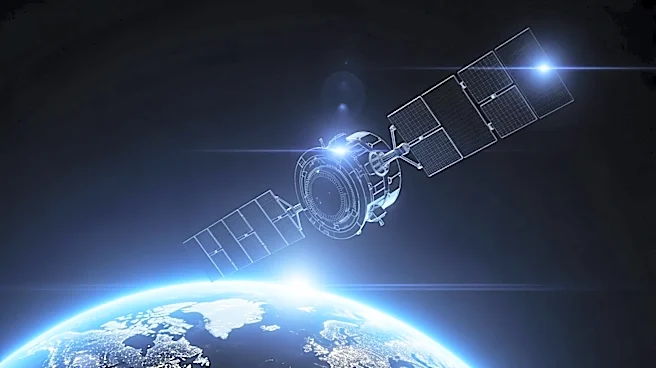
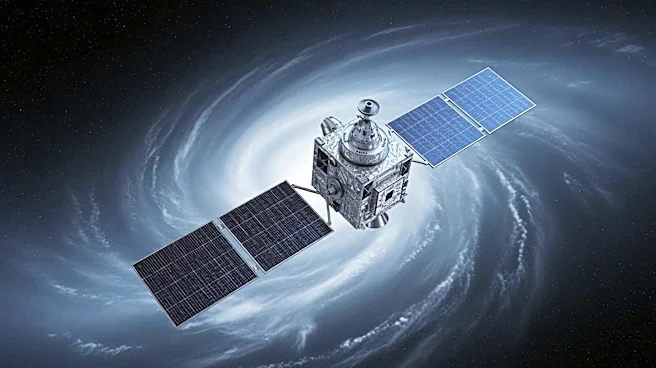
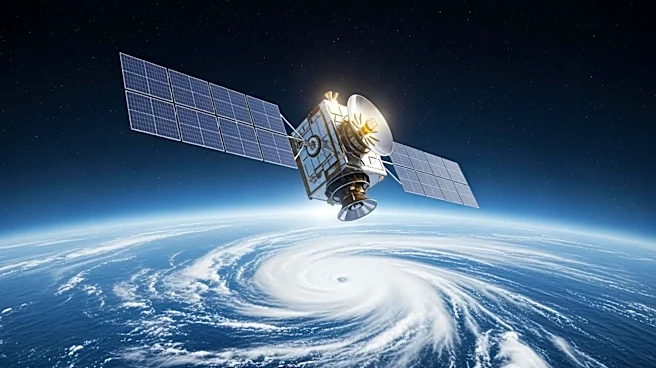
NASA is advancing its INCUS (Investigation of Convective Updrafts) mission, which involves three nearly identical satellites designed to study the dynamics of tropical convective storms. These satellites, currently undergoing testing at Blue Canyon Technologies
in Colorado, are set to launch in 2027 from NASA's Wallops Flight Facility in Virginia. The mission aims to provide the first space-based survey of the vertical motion of air and water in storms, known as convective mass flux. The satellites will fly in close coordination, with the first and second separated by 30 seconds, and the second and third by 90 seconds. The middle satellite will also carry a microwave radiometer. This mission is part of NASA's Earth System Observatory, which seeks to understand Earth's dynamic natural systems.
Why It's Important?
The INCUS mission is significant as it will enhance understanding of tropical storm dynamics, which is crucial for improving weather prediction models and understanding climate change impacts. By providing detailed data on convective mass flux, the mission could lead to better forecasting of severe weather events, potentially saving lives and reducing economic losses. The mission also supports NASA's broader Earth System Observatory goals, which aim to provide comprehensive data on Earth's climate and weather systems. This data is vital for policymakers, scientists, and industries that rely on accurate weather predictions and climate models.
What's Next?
Following the successful testing of the satellites, the next step is their launch in 2027. Once in orbit, the satellites will begin collecting data on tropical storm dynamics. The findings from this mission could influence future research and development in weather prediction and climate science. Stakeholders such as meteorologists, climate scientists, and policymakers will likely monitor the mission's progress closely, as its outcomes could inform strategies for mitigating the impacts of severe weather and climate change.