




What's Happening?
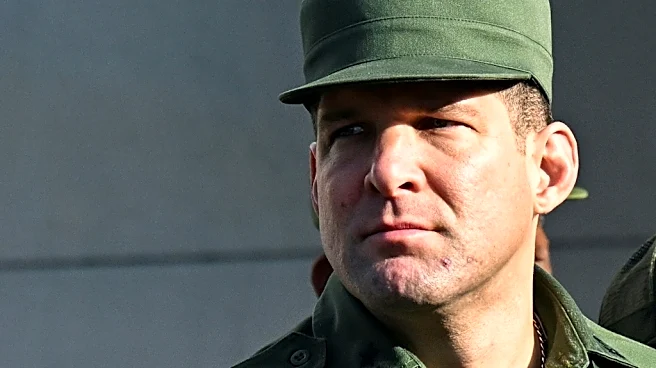
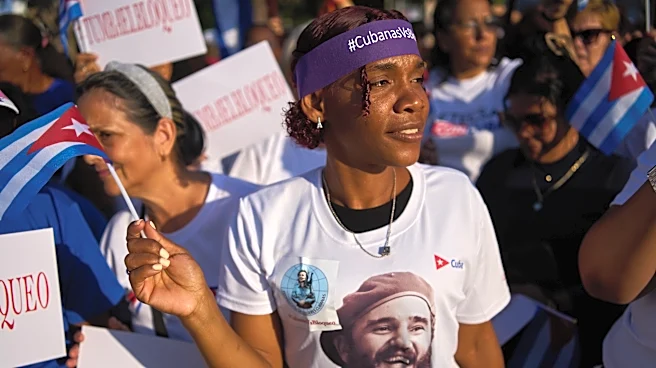
Cuban President Miguel Díaz-Canel has declared he will not step down under pressure from the United States during diplomatic talks. In an interview with NBC News, Díaz-Canel emphasized that Cuban leaders are elected by the Cuban people, not by the U.S.
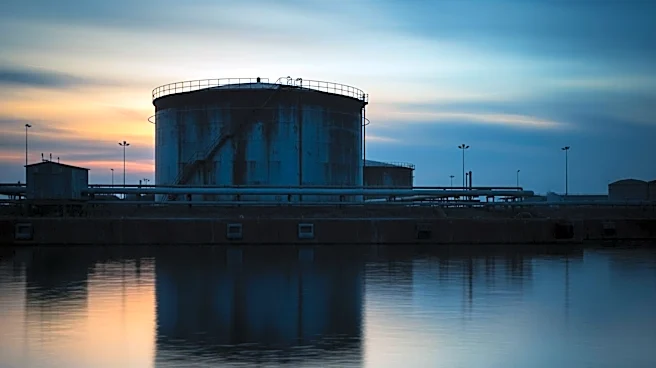
government. The statement comes amid heightened tensions between the U.S. and Cuba, exacerbated by a virtual oil embargo imposed by the U.S., which has led to an energy crisis on the island. Díaz-Canel, who was handpicked by former leader Raúl Castro, remains committed to Cuba's communist principles and expressed willingness to engage in dialogue with the U.S. without preconditions.
Why It's Important?
The refusal of President Díaz-Canel to step down under U.S. pressure highlights the ongoing geopolitical tensions between the two nations. The U.S. embargo has significantly impacted Cuba's economy, leading to energy shortages and affecting essential services like healthcare and transportation. This situation underscores the broader implications of U.S. foreign policy on Cuba and its citizens. The Cuban government's stance may influence future diplomatic relations and economic interactions between the two countries, potentially affecting regional stability and international trade dynamics.
What's Next?
As the U.S. and Cuba continue to navigate their strained relationship, further diplomatic talks are expected. The U.S. may continue to leverage economic sanctions to push for political changes in Cuba, while Cuba seeks to maintain its sovereignty and political system. The outcome of these discussions could shape the future of U.S.-Cuba relations, impacting trade, travel, and regional alliances. Stakeholders, including political leaders and international organizations, will likely monitor these developments closely.