




What's Happening?
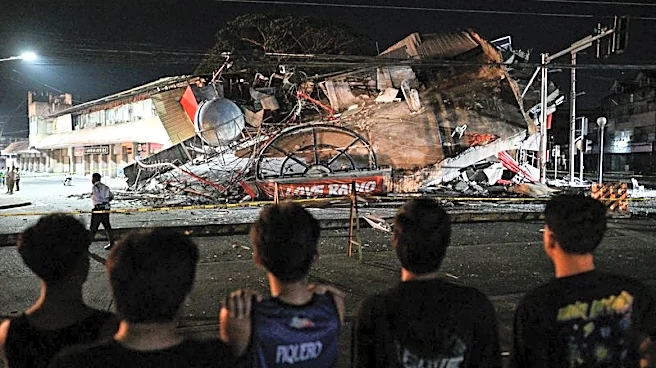
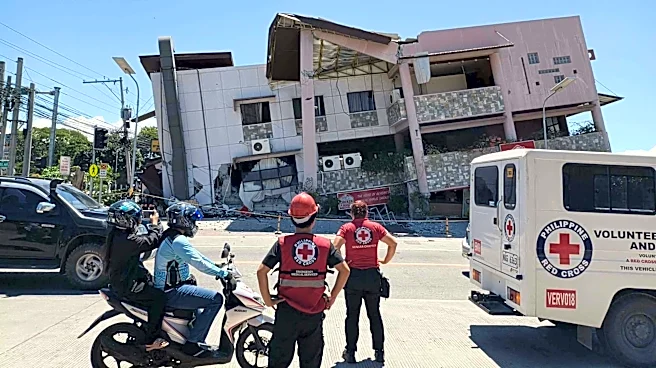
A 7.8 magnitude earthquake struck the southern Philippines, resulting in at least 37 deaths and displacing over 32,000 people. The earthquake, centered off Mindanao, caused significant destruction, including landslides and building collapses. Many residents
fled to emergency shelters, fearing a tsunami. The quake damaged thousands of homes and government buildings, and the international airport in General Santos remains closed. The earthquake is the strongest to hit the Philippines since 1976, highlighting the country's vulnerability to seismic activity.
Why It's Important?
The earthquake underscores the Philippines' susceptibility to natural disasters due to its location on the Pacific 'Ring of Fire.' The displacement of thousands of people and the destruction of infrastructure pose significant challenges for recovery and highlight the need for improved disaster preparedness and response strategies. The event also draws attention to the importance of international cooperation and support in disaster relief efforts. The impact on communities and the economy could be long-lasting, necessitating comprehensive rebuilding and support measures.
What's Next?
Authorities are conducting thorough inspections of damaged buildings to ensure safety and prevent further casualties. The government is coordinating with international partners to provide aid and support to affected communities. Efforts are underway to assess and repair infrastructure, with a focus on ensuring the safety of public buildings before reopening. The earthquake serves as a reminder of the need for ongoing vigilance and preparedness in disaster-prone regions.