



What's Happening?
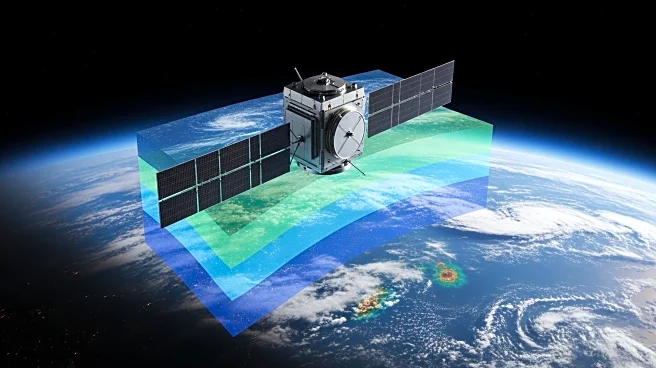
Researchers have demonstrated the feasibility of sending quantum signals from Earth to satellites, a method previously considered impractical. This breakthrough, led by Professor Simon Devitt and his team from the University of Technology Sydney, was
published in Physical Review Research. The study shows that quantum entanglement distribution via uplink satellite channels can overcome limitations of current quantum satellite systems, which primarily send signals from space to Earth. The new approach allows for stronger signals and easier maintenance, potentially enabling large-scale quantum networks using satellites as relays.
Why It's Important?
This development could significantly impact the future of secure communications and quantum computing. By enabling Earth-to-space quantum links, the research addresses a major hurdle in creating global quantum networks. Such networks could revolutionize data security and computational capabilities, offering unprecedented levels of encryption and processing power. The ability to send quantum signals from Earth could also reduce costs and complexity associated with satellite-based quantum systems, making them more accessible and practical for widespread use.
What's Next?
The research team suggests that the feasibility of Earth-to-space quantum links could be tested using drones or balloon-mounted receivers. This step would pave the way for deploying small satellites in low Earth orbit to establish quantum networks spanning continents. The success of these tests could lead to the development of a quantum internet, fundamentally changing how data is transmitted and secured globally.
Beyond the Headlines
The implications of this research extend beyond technical advancements. It raises questions about the future of data privacy and the ethical use of quantum technology. As quantum networks become more feasible, there will be a need for international regulations and agreements to ensure that these powerful tools are used responsibly and equitably.