
What's Happening?
The latest consumer price index reveals a complex scenario for U.S. food prices, with some grocery categories experiencing declines while others see increases. Between February and March, prices for meats,
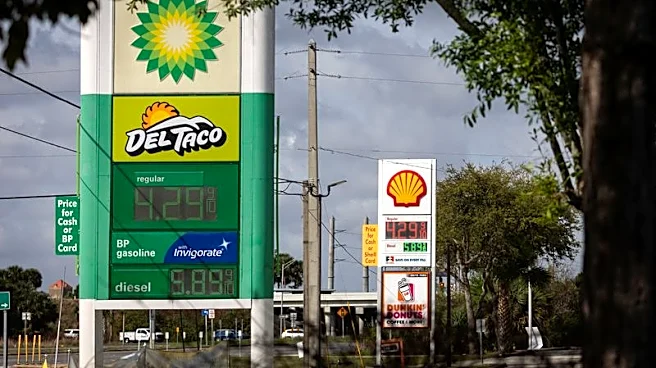
poultry, fish, eggs, cereals, bakery products, and dairy fell by 0.6 percent. However, fruits and vegetables rose by 1 percent. Despite these fluctuations, food prices at home were still 1.9 percent higher than a year ago. The ongoing Iran war, which began with U.S. and Israeli strikes, has led to a blockade of the Strait of Hormuz, significantly impacting global oil markets and causing a 21.2 percent rise in U.S. gas prices in March.
Why It's Important?
The Iran conflict has caused severe disruptions in the global oil market, leading to increased gas and diesel prices in the U.S. This rise in energy costs is expected to affect other sectors, including groceries, as higher transportation and production costs are passed on to consumers. The situation underscores the interconnectedness of global events and domestic economic conditions, highlighting potential inflationary pressures on everyday goods. Stakeholders, including consumers and businesses, may face financial strain as prices continue to rise.
What's Next?
A conditional two-week ceasefire between the U.S. and Iran offers a temporary reprieve, but concerns about long-term economic impacts persist. Experts warn that rising energy costs could lead to increased prices for food, clothing, and holidays. Additionally, fertilizer prices have surged due to the conflict, potentially leading to higher agricultural costs and further price hikes for consumers. The situation remains fluid, with potential for further economic disruptions depending on geopolitical developments.