



What's Happening?
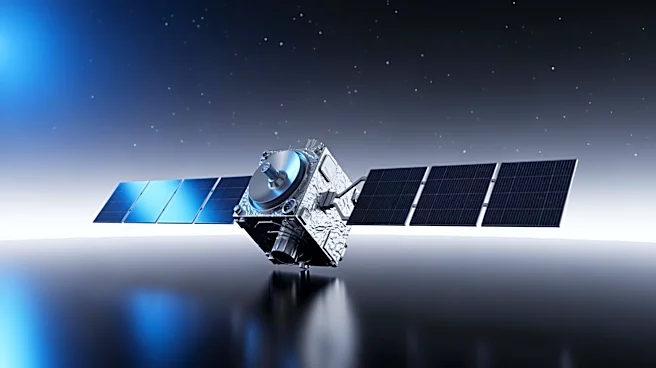
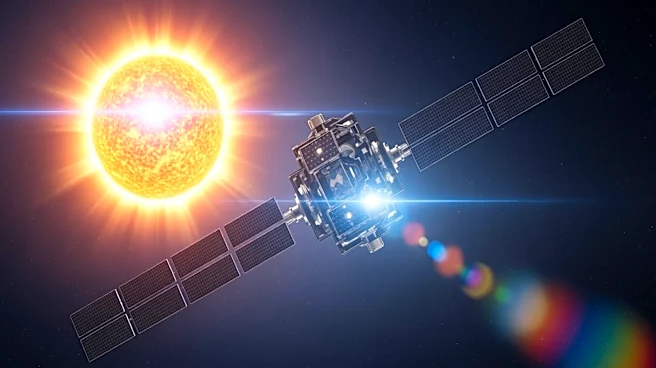
The world's first space-based neutrino detector has been launched to study neutrino particles that constantly bombard Earth. This mission, part of the SNAPPY project, aims to test technology that could help researchers understand hidden processes within
the sun. The detector, made of gallium and tungsten crystals, is embedded in a 3U cubesat and will orbit Earth at an altitude of 310 miles for about two years. The project, led by Wichita State University professor Nickolas Solomey, seeks to validate technology for future missions that could place a neutrino detector closer to the sun. Neutrinos, which are near massless particles, are difficult to detect due to their weak interactions with matter. The SNAPPY detector's sensitivity could allow it to capture neutrinos that evade Earth-based detection.
Why It's Important?
This development is significant as it represents a new frontier in space-based scientific research. By studying neutrinos, scientists can gain insights into the fusion processes occurring in the sun's core, which are otherwise inaccessible. Understanding these processes could enhance knowledge of solar physics and contribute to broader astrophysical research. The success of this mission could pave the way for more advanced space-based detectors, potentially leading to breakthroughs in particle physics and cosmology. Additionally, the project highlights the growing role of small-scale, cost-effective space missions in advancing scientific knowledge.
What's Next?
If the SNAPPY mission proves successful, it could encourage further investment in space-based neutrino detection. This might lead to larger and more sophisticated detectors being deployed closer to the sun, providing even more detailed data on solar processes. The results of this mission could also influence future NASA missions and collaborations with international space agencies. Researchers will closely monitor the data collected by the SNAPPY detector to assess its effectiveness and potential for future applications.