
What's Happening?
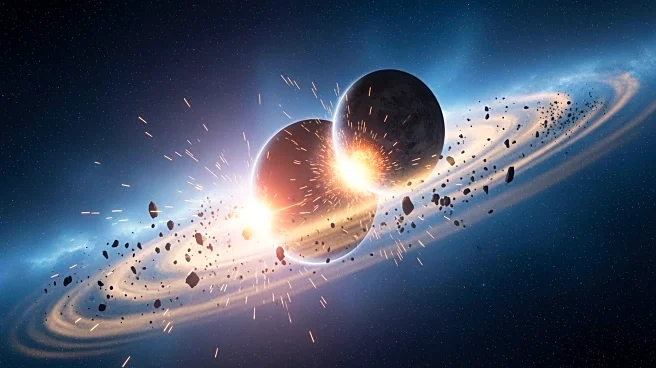
Recent observations have confirmed that asteroid 2024 YR4, once considered a potential threat to the moon, will not collide with it. Discovered in December 2024, YR4 was initially thought to have a 3.1% chance of impacting Earth in 2032, which was later
ruled out. Concerns then shifted to a possible lunar impact, with a 4.3% chance calculated. However, new data from the James Webb Space Telescope has refined the asteroid's trajectory, showing it will pass the moon at a safe distance of over 12,400 miles. This eliminates the risk of lunar debris affecting satellites and communications.
Why It's Important?
The confirmation that YR4 will not impact the moon underscores the importance of advanced telescopes in planetary defense. The ability to accurately track and predict asteroid paths is crucial for protecting both Earth and space infrastructure. The James Webb Space Telescope's role in this process highlights its value as a tool for monitoring near-Earth objects. This capability is essential for ensuring the safety of satellites and other space assets, as well as for planning future lunar missions. The findings also demonstrate the effectiveness of international collaboration in addressing potential space threats.
What's Next?
With YR4 no longer posing a threat, focus will shift to monitoring other near-Earth objects. The development of new observatories, such as the Vera Rubin Observatory, will enhance our ability to detect and track asteroids. These advancements will improve our planetary defense strategies and ensure that we are prepared for any future threats. The techniques used in the JWST observations of YR4 will also inform future efforts to track and analyze other potentially hazardous asteroids, contributing to our understanding of asteroid dynamics and their potential impact on Earth and the moon.