






What's Happening?
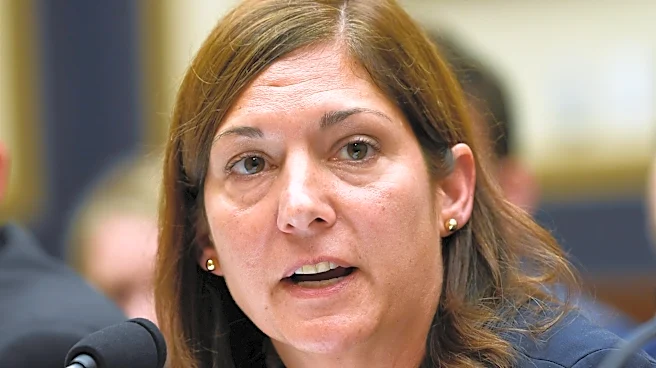
The Federal Communications Commission (FCC) announced it is moving forward with a rule change that will allow state and local correctional facilities to jam cellphone signals within their premises. FCC Chair Brendan Carr stated that the commission will vote
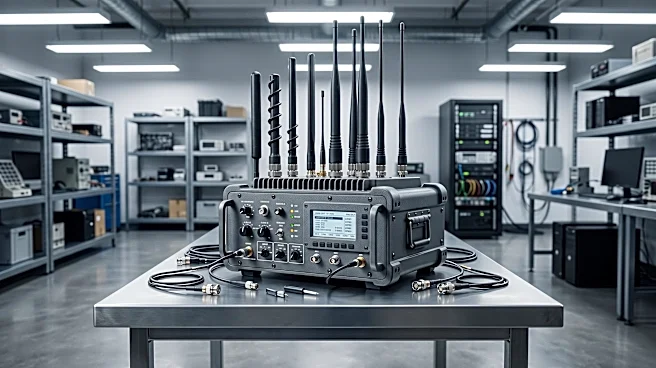
on the final rule change in three weeks. This announcement was made at a press conference in Little Rock, where Chair Carr was joined by U.S. Sen. Tom Cotton and Arkansas Attorney General Tim Griffin, among other officials. Currently, federal prisons can use jamming technology, but state and local facilities have been prohibited from doing so under a federal law that bans interference with licensed radio communications. The proposed rule change aims to deauthorize the use of cellphones within prison facilities, thereby enabling the deployment of jamming technology. Chair Carr previously indicated that the longstanding ban was due to a 'misreading' of the law.
Why It's Important?
This rule change is significant for public safety and prison security. Proponents argue that contraband cellphones in prisons pose a substantial threat, enabling incarcerated individuals to coordinate criminal activities such as drug trafficking, violent attacks, and sextortion schemes from behind bars. These activities endanger correctional officers, other inmates, and the public. Allowing state and local facilities to jam signals would provide them with a critical tool to disrupt these illicit communications, thereby enhancing security and control within correctional environments. However, critics argue that such measures could also cut off incarcerated individuals from legitimate contact with family and legal counsel, especially given the high costs of official prison phone services. This move could also face legal challenges, though Chair Carr expressed confidence in its legal standing.
What's Next?
The FCC commissioners are scheduled to vote on the final rule change in three weeks. If approved, state and local correctional officials will be able to apply to the FCC for authorization to implement cellphone jamming technology. These applications will require facilities to outline their jamming plans to receive agency approval. While the rule change would permit jamming, it would not mandate its use, allowing individual facilities to decide if and how to deploy the technology. There is a possibility of legal challenges to the new rule once it is enacted. Additionally, discussions may continue regarding the balance between security measures and the rights of incarcerated individuals to maintain contact with the outside world, particularly concerning the cost of official communication channels.
Beyond the Headlines
The FCC's decision to allow cellphone jamming in state and local prisons delves into complex ethical and legal dimensions. While the primary goal is to enhance security and prevent crime, concerns about potential infringements on communication rights for incarcerated individuals are prominent. Critics argue that high costs of official prison phone calls drive the demand for contraband phones, suggesting that addressing affordability could be a more humane solution. This development also raises questions about the scope of government authority to restrict communication within specific environments and whether such measures could set precedents for other contexts, although Chair Carr has stated that this authorization is unique to prisons and jails. The long-term implications could include a shift in prison management strategies, increased reliance on technological solutions for security, and ongoing debates about the human rights of incarcerated populations.