
What's Happening?
The government of Meghalaya, led by Chief Minister Conrad K Sangma, is actively promoting large-scale fish farming to achieve self-sufficiency in fish production. Currently, the state consumes between
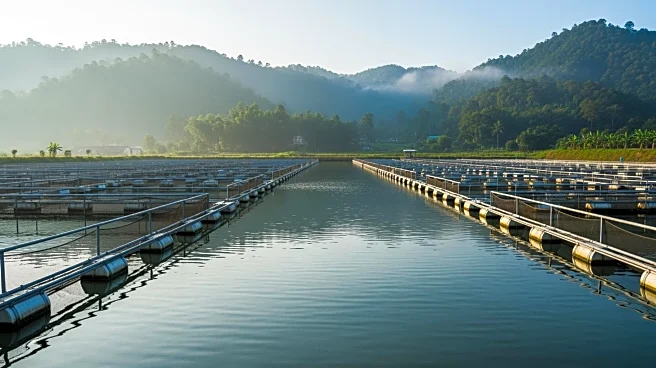
28,000 and 32,000 metric tonnes of fish annually, but local production only accounts for 20,000 metric tonnes. To bridge this gap, the state imports 12,000 metric tonnes from other regions. The government has introduced various support structures and schemes to encourage farmers to increase production. Additionally, private entrepreneurs are being motivated to establish large-scale commercial fish farms. At present, 61 hatcheries are operational, producing 24.7 million fingerlings, with plans to establish a total of 96 hatcheries. The government aims to reach a production level that not only meets local demand but also allows for exports to neighboring states. Efforts are also being made to ensure fish quality and safety through random inspections by food safety officials.
Why It's Important?
Achieving self-sufficiency in fish production is crucial for Meghalaya's economic and food security. By reducing dependency on imports, the state can save costs and potentially generate revenue through exports. This initiative also promises to create job opportunities and stimulate economic growth within the region. The focus on large-scale commercial fish farming could transform the local fishery industry, making it more competitive and sustainable. Ensuring fish quality and safety is vital for consumer health and maintaining market trust. The government's investment in infrastructure, such as hatcheries and feed mills, underscores a commitment to long-term development in the sector.
What's Next?
The Meghalaya government plans to continue expanding its fish farming infrastructure, with the goal of establishing 96 hatcheries and increasing fish feed production to meet the demand of 30,000 metric tonnes. The state has sanctioned funds for setting up 12 new feed mills and upgrading 17 existing ones. As production increases, the government anticipates reaching a point where it can export fish to neighboring states, further boosting the local economy. Ongoing inspections and quality control measures will be crucial in maintaining the safety and marketability of Meghalaya's fish products.