





What's Happening?
Governor Tina Kotek announced that the Bonneville Power Administration (BPA) has reversed its decision to immediately cease funding for the Select Area Fisheries Enhancement (SAFE) Program. Following discussions with BPA Administrator Travis Kavulla,
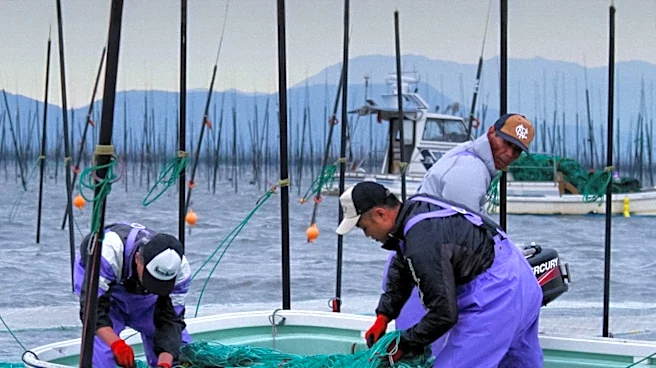
the federal agency will now provide funding for the program for an additional federal fiscal year. This decision comes after significant advocacy from the State of Oregon, its Congressional delegation, members of the Oregon Legislature’s Coastal Caucus, recreational anglers, commercial fishermen, and various communities across the region. The SAFE program, which has operated for over 30 years, is responsible for raising millions of salmon annually, supporting both recreational and commercial fisheries in the Lower Columbia River, including the popular Buoy 10 fishery near Astoria. BPA's initial decision in June to end funding had threatened over 7 million salmon already in production and created an estimated $2.4 million funding gap for the program's three operating partners: the Oregon Department of Fish and Wildlife (ODFW), Washington Department of Fish and Wildlife, and Clatsop County.
Why It's Important?
The one-year reprieve for the SAFE Program is crucial for the economic health and cultural traditions of Oregon's coastal communities. Salmon are a cornerstone of these communities, and the program's continuation prevents immediate economic harm to those dependent on the fishing industry. The SAFE program produces approximately 9 million salmon each year, with nearly 35% of SAFE-produced spring Chinook and coho caught by recreational anglers, and an estimated 99% of spring Chinook harvested in non-treaty commercial fisheries originating from the program. Beyond economic impacts, the program also plays a vital role in conservation by reducing pressure on wild salmon populations and providing a significant food source for endangered southern resident killer whales. The initial funding cut would have jeopardized millions of salmon and fishing opportunities, highlighting the delicate balance between federal funding decisions and regional ecological and economic stability. This reversal underscores the power of collective advocacy from state leadership, congressional representatives, and local communities in influencing federal agency decisions that have direct, tangible impacts on local economies and environments.
What's Next?
The one-year funding extension provides a critical window for state and regional partners to work towards a long-term solution for the SAFE Program's funding. Governor Kotek emphasized that this reprieve offers time to develop a sustainable plan, indicating that discussions and collaborative efforts will continue over the next year. Stakeholders, including the Oregon Department of Fish and Wildlife, Washington Department of Fish and Wildlife, and Clatsop County, will likely engage with BPA and other federal entities to secure permanent funding or explore alternative financial models. The continued advocacy from Oregon's Congressional delegation and state legislators will be essential in these ongoing efforts. The focus will be on ensuring the program's stability beyond the current one-year extension to protect both the salmon populations and the livelihoods of those in the fishing communities.
Beyond the Headlines
The situation with the SAFE Program highlights broader issues concerning federal funding for regional environmental and economic initiatives, particularly those with long-standing community reliance. The initial decision by BPA to cut funding, despite the program's 30-year history and significant impact, points to potential shifts in federal priorities or budget allocations that can have profound ripple effects at the local level. This event also underscores the increasing importance of state-level leadership and inter-agency cooperation in mitigating adverse federal decisions. The success of the advocacy efforts demonstrates the collective power of diverse groups—from state governors and congressional representatives to local fishermen and environmentalists—in safeguarding vital resources and traditions. It also brings to light the ongoing challenge of balancing energy infrastructure management (BPA's primary role) with environmental stewardship and economic support for affected communities, especially in regions where natural resources are deeply intertwined with local identity and livelihood.