









What's Happening?
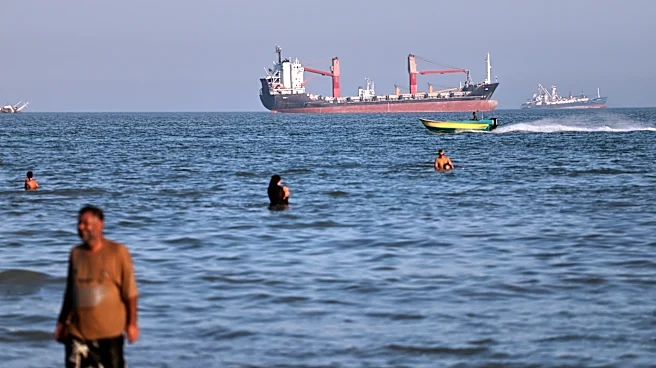
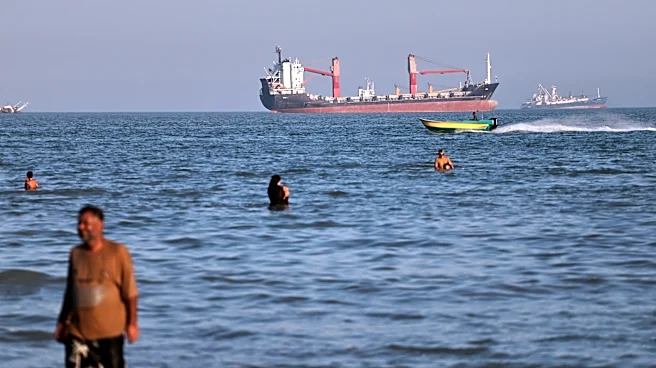
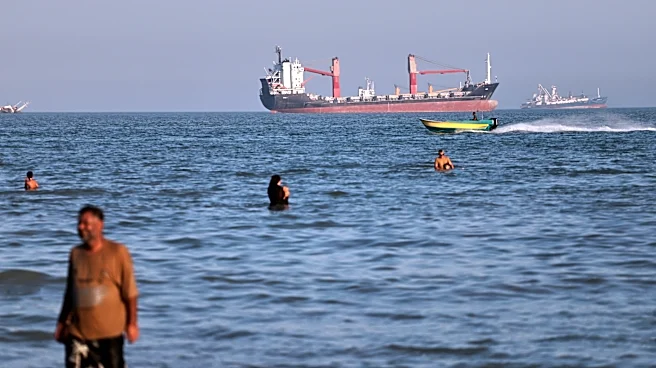
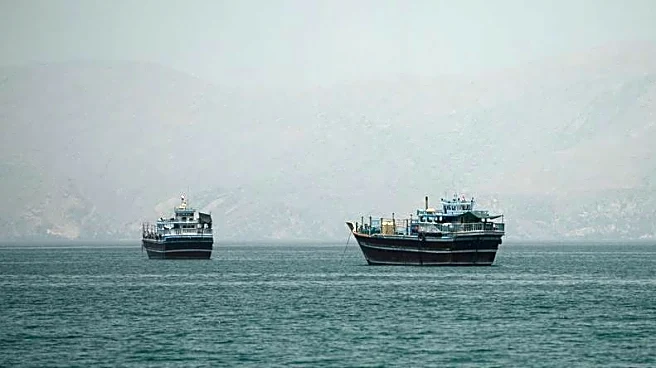
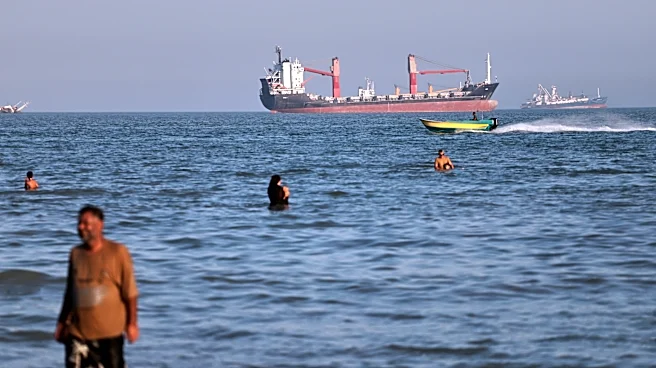
The International Maritime Organization (IMO) announced that Iran and Oman will coordinate a large-scale evacuation of over 11,000 seafarers stranded in the Strait of Hormuz. This move comes amid ongoing tensions following the outbreak of war between
the U.S., Israel, and Iran. The evacuation aims to ensure the safety of seafarers and the continuity of global trade. Brent crude oil prices have dropped to their lowest since the conflict began, as traders anticipate the resumption of traffic through the strait. The operation involves complex coordination, with shipmasters instructed to wait for contact from coordinating agencies.
Why It's Important?
The Strait of Hormuz is a critical chokepoint for global oil shipments, and disruptions can have significant impacts on global oil prices and trade. The evacuation and potential resumption of traffic could stabilize oil markets and reduce economic uncertainty. However, the situation remains tense, with reports of continued harassment of vessels by Iran. The outcome of this operation could influence geopolitical dynamics in the region and affect international relations, particularly between the U.S., Iran, and other Gulf states.
What's Next?
The U.S. and Iran have signed a Memorandum of Understanding, giving them 60 days to reach a final agreement on the situation. The ongoing negotiations and the successful execution of the evacuation will be critical in determining the future stability of the region. Additionally, discussions on transit fees and oversight of the strait could have long-term implications for maritime trade and regional security.