





What's Happening?
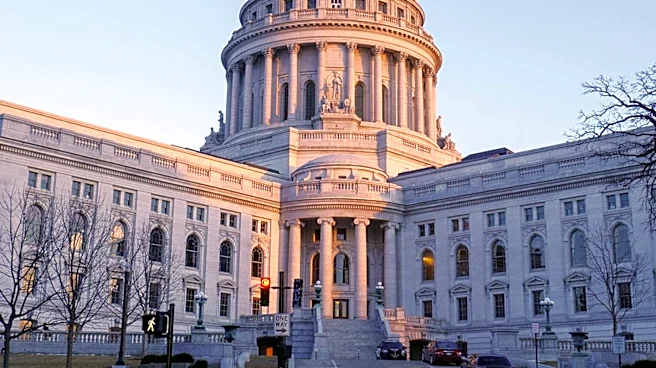
A Waukesha County Circuit Judge, J. Arthur Melvin, has declared a provision within the 2025-27 Wisconsin state budget unconstitutional. This provision diverted an estimated $2.2 million annually from the state's Common School Fund to finance 12 assistant
district attorney positions in Milwaukee County. Previously, these positions were covered by federal funding. The state constitution mandates that all 'clear proceeds' from traffic fines and forfeitures must go to the Common School Fund, which then provides library aid to schools statewide. Under existing state law, counties are required to contribute 50% of traffic fine revenues to this fund. The contested provision allowed Milwaukee County to retain 100% of these revenues for the prosecutor positions, effectively exempting it from contributing to the Common School Fund while still allowing it to receive school library funding. Judge Melvin's decision, issued orally and to be formalized in writing by September 4, will revert the funding mechanism to its pre-2025-27 budget state, ensuring Milwaukee County contributes similar percentages to the Common School Fund as other counties.
Why It's Important?
This ruling has significant implications for state budgeting, constitutional law, and educational funding in Wisconsin. The Common School Fund, which provides crucial library aid to schools across the state, is constitutionally protected, and its integrity is central to ensuring equitable educational resources. The diversion of funds, even for public safety initiatives, raised concerns about setting a precedent for circumventing constitutional mandates. State Treasurer John Leiber, who oversees the fund, praised the decision, emphasizing its role in protecting the fund's integrity and preventing similar attempts to reallocate its resources. The Wisconsin Institute for Law & Liberty (WILL), representing the plaintiffs, highlighted that the decision ends an 'unconstitutional and costly money grab' by Milwaukee County. This case underscores the ongoing tension between state legislative priorities, such as addressing public safety concerns in Milwaukee, and the constitutional protections afforded to specific state funds, particularly those benefiting education.
What's Next?
Following Judge Melvin's formal written order on September 4, the funding mechanism for Milwaukee County's assistant district attorney positions will revert to its previous structure. This means Milwaukee County will once again be required to contribute 50% of its traffic fine revenues to the Common School Fund, aligning its practices with other counties in Wisconsin. The state legislature and Governor Tony Evers' administration will need to address the funding gap created for the 12 prosecutor positions in Milwaukee County, as the previous federal funding is no longer available and the state budget provision has been invalidated. This could lead to new legislative proposals or budget adjustments to ensure these critical public safety roles remain funded. The decision may also deter other counties or future legislative efforts from attempting similar diversions of constitutionally protected funds, reinforcing the importance of adhering to constitutional provisions regarding state finances.
Beyond the Headlines
This judicial decision highlights a deeper constitutional principle regarding the separation of powers and the limits of legislative authority, even when pursuing seemingly beneficial public policy goals. The Common School Fund's constitutional protection reflects a long-standing commitment to public education in Wisconsin, ensuring a stable and dedicated funding source for school libraries. The attempt to bypass this constitutional mandate, even through a bipartisan agreement, underscores the challenges in balancing various state priorities—such as public safety and education—within a fixed legal framework. The ruling reinforces the judiciary's role in upholding constitutional integrity and preventing legislative actions that could erode foundational state provisions. It also brings to light the complexities of state budget negotiations, where trade-offs and creative funding solutions can sometimes push the boundaries of constitutional legality, ultimately requiring judicial intervention to maintain balance.