

What's Happening?
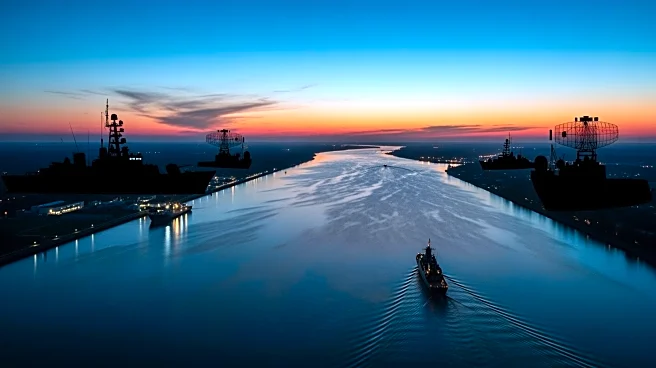
Iran has declared that the Strait of Hormuz is open to all shipping except vessels linked to 'Iran's enemies,' following a threat from U.S. President Donald Trump. Trump warned that Iranian power plants would be targeted if the strait was not fully opened
within 48 hours. The ongoing U.S.-Israeli conflict with Iran has heightened tensions, with the strait being a critical conduit for about a fifth of global oil and liquefied natural gas supplies. Iran's representative to the UN maritime agency stated that Tehran is willing to cooperate with the International Maritime Organization to enhance maritime safety, provided that ships coordinate security arrangements with Iran.
Why It's Important?
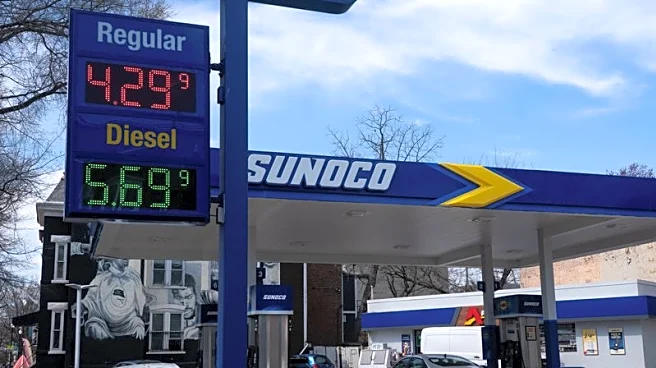
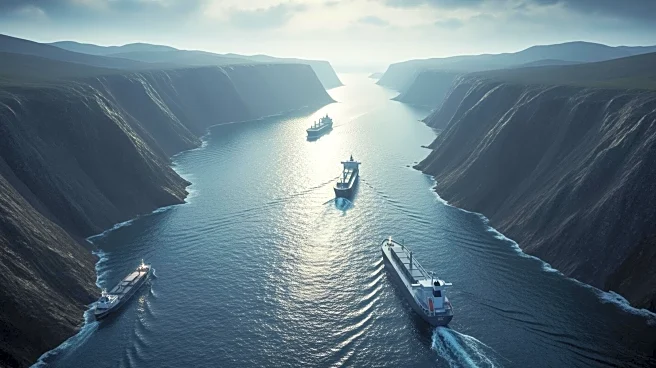
The Strait of Hormuz is a vital chokepoint for global energy supplies, and any disruption could lead to significant economic repercussions worldwide. The current situation has already caused a halt in tanker traffic, leading to a surge in oil prices and putting global markets under strain. Iran's selective access policy for the strait reflects its strategic use of the waterway as leverage in its geopolitical conflict with the U.S. and Israel. The potential for military escalation remains high, with significant implications for international trade and energy security.
What's Next?
The international community is likely to push for diplomatic solutions to de-escalate tensions and ensure the free flow of trade through the Strait of Hormuz. The U.S. may continue to exert pressure on Iran through diplomatic and military channels, while Iran may seek to strengthen alliances with other nations to counter U.S. influence. The situation remains fluid, with potential for further developments depending on the actions of key stakeholders, including the U.S., Iran, and Israel.