









What's Happening?
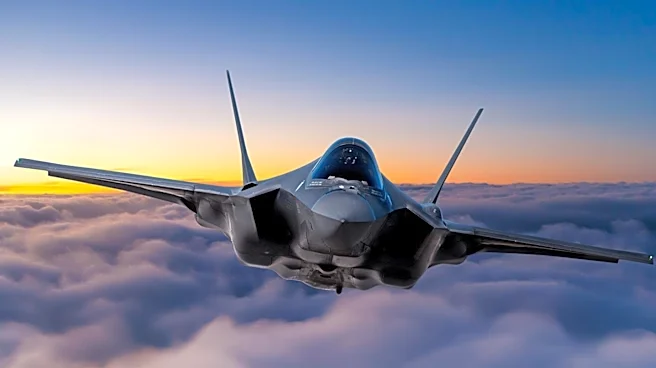
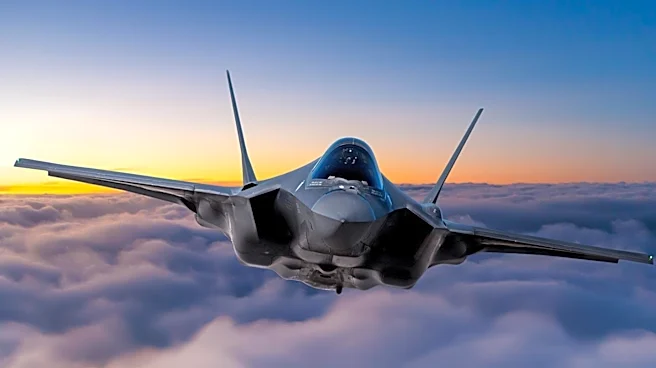
Lockheed Martin Aeronautics Co. has been awarded a $114.6 million U.S. Navy contract order. This contract focuses on redesigning, integrating, qualifying, and testing two critical navigation systems for the F-35 Lightning II aircraft: the Global Positioning
System Electronic Unit and the NAV100 Inertial Navigation System. The primary objective of this nonrecurring engineering and redesign work is to replace obsolete electronic components. This effort aims to maintain the systems' existing performance and compatibility with F-35 aircraft, ensuring the continued production and sustainment of F-35s for the U.S. Air Force, Navy, Marine Corps, and international partners. The work, which is not competitively procured, is expected to be completed by January 2030, with significant portions performed in El Segundo, California, and Fort Worth, Texas.
Why It's Important?
This contract is crucial for the long-term viability and operational readiness of the F-35 program, a cornerstone of U.S. and allied air power. By addressing diminishing manufacturing sources and replacing obsolete components, the U.S. Department of Defense aims to prevent potential disruptions to F-35 production and sustainment activities. The proactive replacement of aging electronics ensures the stability of the aircraft's supply chain, mitigating risks associated with component obsolescence that could otherwise lead to costly delays or operational limitations. This investment underscores the commitment to maintaining the F-35's advanced capabilities and interoperability among partner nations, reinforcing national security and defense alliances.
What's Next?
The immediate next steps involve Lockheed Martin commencing the redesign, integration, qualification, and testing phases of the F-35 navigation systems. This multi-year effort is slated for completion by January 2030. The successful execution of this contract will ensure a stable supply chain for critical F-35 components, preventing future manufacturing and maintenance issues. The funding for this order, approximately $46.4 million each from fiscal 2026 Air Force and Navy aircraft procurement funds, along with $21.8 million from F-35 cooperative program partners, indicates a sustained commitment to the F-35 program. This ongoing investment will likely lead to further contracts for sustainment and modernization as the F-35 fleet continues to evolve.
Beyond the Headlines
The contract highlights a broader challenge within advanced military technology: the rapid obsolescence of electronic components. As technology advances, maintaining complex systems like the F-35 requires continuous investment in redesign and modernization to ensure operational longevity. This situation often necessitates non-competitive contracts with original equipment manufacturers like Lockheed Martin, given their proprietary knowledge and specialized capabilities. The F-35 program's reliance on international partners for funding also underscores the collaborative nature of modern defense initiatives and the shared responsibility in maintaining cutting-edge military assets. This continuous cycle of upgrades and sustainment is a significant factor in the long-term cost and strategic planning of defense programs.