







What's Happening?
Amtrak announced on October 22 that the Federal Railroad Administration (FRA) has selected the Hiawatha West project for Consolidated Rail Infrastructure and Safety Improvements (CRISI) funding. This award is a significant step towards extending the Chicago-Milwaukee
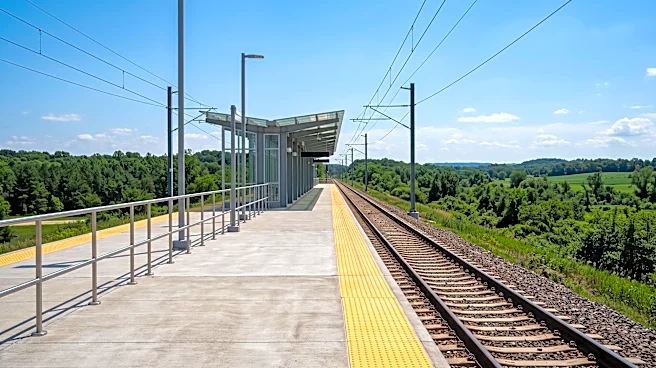
Hiawatha service westward into Waukesha, Jefferson, and Dane counties in Wisconsin, including the cities of Madison, Watertown, and Pewaukee. The project is a collaborative effort between the Wisconsin Department of Transportation, Amtrak, and host railroads CPKC and the Wisconsin & Southern Railroad. The track work involved in this expansion is also intended to benefit other Amtrak services, specifically the Borealis and the Empire Builder. Wisconsin Governor Tony Evers and U.S. Senator Tammy Baldwin had previously announced on October 16 that the state secured over $218 million for this expansion. The grant will fund the rehabilitation and expansion of track, bridges, and crossings, as well as the construction of new intercity passenger stations, including ADA-accessible temporary station platforms in Madison, Watertown, and Pewaukee.
Why It's Important?
This federal funding marks a crucial advancement for passenger rail connectivity in Wisconsin, promising to extend convenient and reliable rail service to more communities. The Hiawatha West expansion is projected to significantly boost regional economic activity, with Amtrak estimating an addition of approximately 278,000 riders annually and about $46 million in yearly regional economic benefits. Furthermore, the project is expected to create around 200 permanent jobs directly tied to the passenger rail operation. By improving rail infrastructure, the initiative aims to strengthen the regional economy and provide residents with a safer, more reliable, and convenient travel option. The collaboration between state agencies, Amtrak, and freight railroads highlights a concerted effort to enhance multimodal transportation options and address growing demand for passenger rail services in the Midwest. This investment underscores the federal government's commitment to improving and expanding national rail networks.
What's Next?
With the federal funding secured, the Wisconsin Department of Transportation and Amtrak will proceed with the detailed planning and implementation phases of the Hiawatha West project. This will involve further coordination with CPKC and the Wisconsin & Southern Railroad to execute the necessary track work, bridge rehabilitation, and crossing upgrades. The construction of new intercity passenger stations and ADA-accessible temporary platforms in Madison, Watertown, and Pewaukee will also commence. Stakeholders will focus on ensuring the project adheres to timelines and budget while minimizing disruptions to existing rail services. The successful completion of this expansion will likely lead to increased ridership on the Hiawatha service and potentially influence future rail development projects in Wisconsin and neighboring states. Monitoring the economic and ridership impacts will be crucial in evaluating the project's success and informing future infrastructure investments.
Beyond the Headlines
The Hiawatha West expansion represents more than just an extension of a rail line; it signifies a broader commitment to sustainable transportation and regional development. By connecting Madison, Wisconsin's capital and second-largest city, to the national rail network, the project aims to reduce reliance on automobile travel, potentially easing road congestion and lowering carbon emissions. This initiative also highlights the growing importance of intercity passenger rail as a catalyst for economic growth, attracting businesses and tourism to the newly connected communities. The project's focus on upgrading existing infrastructure demonstrates a cost-effective approach to expanding rail service, leveraging existing assets while enhancing safety and capacity. Furthermore, the collaboration between passenger and freight rail entities showcases a model for future infrastructure projects where shared corridors can benefit multiple stakeholders and serve diverse transportation needs.