
What's Happening?
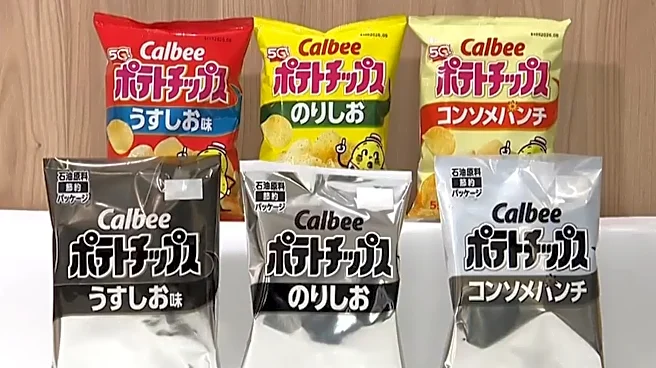
The ongoing conflict in Iran has led to a shortage of colored ink, affecting the packaging of snacks in Japan. Tokyo-based Calbee Inc., a major snack manufacturer, announced that it will switch to black-and-white
packaging for 14 of its products starting May 25. This change is a response to the disrupted supply of naphtha, an oil-derived product used in ink production, due to the war and the closure of the Strait of Hormuz. Despite the packaging change, the contents of the snacks remain unchanged. Japan, heavily reliant on oil imports, has managed to maintain calm by leveraging its oil reserves, but the ink shortage highlights the broader impact of geopolitical tensions on global supply chains.
Why It's Important?
This development underscores the far-reaching effects of geopolitical conflicts on global supply chains, particularly in industries reliant on specific raw materials. For Japan, a country that imports nearly all its oil, the ink shortage is a reminder of its vulnerability to international disruptions. The situation also highlights the interconnectedness of global markets, where a conflict in one region can have ripple effects on consumer goods in another. Companies like Calbee must adapt quickly to maintain product availability, reflecting the need for flexibility in business operations amid geopolitical uncertainties.
What's Next?
Calbee's decision to alter its packaging could prompt other companies facing similar shortages to adopt similar measures. The duration of this packaging change remains uncertain, depending on the resolution of the conflict and the restoration of supply chains. Meanwhile, Japan may need to explore alternative sources or strategies to mitigate future disruptions. The situation could also lead to increased discussions on the importance of diversifying supply chains and reducing dependency on single sources for critical materials.