





What's Happening?
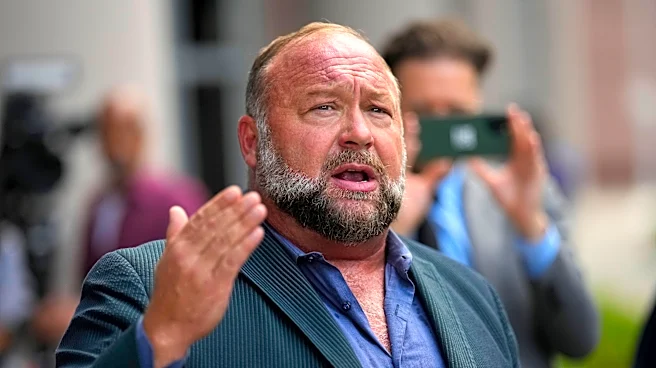
A Texas court has significantly reduced a $50 million judgment against Infowars founder Alex Jones to $1.5 million. This ruling stems from a lawsuit filed by Sandy Hook parents Neil Heslin and Scarlett Lewis, who sued Jones for falsely claiming the 2012
school shooting was a hoax. The Texas 3rd Court of Appeals unanimously determined that the parents did not provide sufficient evidence to exceed the state's $750,000 cap on damages for each plaintiff. The appeals court concluded that the trial court judge had improperly allowed the parents to seek damages above this cap. Despite this reduction, the ruling does not impact a separate $1.4 billion judgment against Jones in Connecticut. Jones, who has filed for bankruptcy, continues to appeal the financial judgments against him.
Why It's Important?
This decision by the Texas court has significant implications for the legal landscape surrounding defamation and free speech, particularly in cases involving public figures and large damage awards. While a reduction from $50 million to $1.5 million is a substantial legal victory for Alex Jones in Texas, it does not negate the larger financial liabilities he faces from the Connecticut judgment. The ruling highlights the complexities and variations in state laws regarding damage caps, which can significantly alter the financial outcomes of such lawsuits. For the Sandy Hook families, while the Texas award is reduced, the core finding that Jones was liable for peddling lies remains. This case continues to serve as a precedent for holding individuals accountable for spreading misinformation, especially when it causes severe emotional distress and harassment to victims.
What's Next?
Alex Jones has indicated his intention to appeal the Texas ruling further to the state Supreme Court, aiming to have the remaining damages dismissed entirely. His legal team views the reduction as a victory for First Amendment rights, while the attorneys for the Sandy Hook families consider the ruling largely irrelevant given the much larger judgment in Connecticut. Jones and his company, Free Speech Systems, are currently undergoing bankruptcy proceedings, which will continue to determine how and if the judgments will be paid. The ongoing legal battles underscore the protracted nature of such high-profile cases and the determination of both sides to pursue their claims. The outcome of these appeals and bankruptcy proceedings will ultimately dictate the final financial consequences for Jones and the extent of restitution for the victims' families.
Beyond the Headlines
The Alex Jones case transcends a typical defamation lawsuit, delving into profound questions about the responsibilities of media personalities, the spread of misinformation in the digital age, and the limits of free speech. The initial claims by Jones that the Sandy Hook shooting was a hoax led to years of harassment and threats against the victims' families, highlighting the real-world dangers of conspiracy theories. This case has become a touchstone in discussions about accountability for online content and the role of platforms in moderating harmful speech. The legal battles also expose the emotional and psychological toll on victims who are forced to relive their trauma in public forums. The ongoing appeals and bankruptcy proceedings will continue to shape legal precedents for how society addresses the intersection of speech, truth, and harm in an increasingly polarized information environment.