




What's Happening?
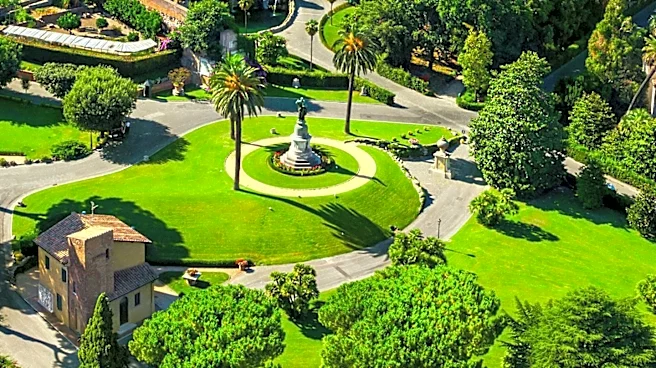
The Pope's Garden, located next to the Mater Ecclesiae monastery within the Vatican Gardens, has transitioned to 100% organic cultivation. This initiative aligns with the principles of caring for Creation, as outlined in Pope Francis' encyclical 'Laudato
si'.' The garden, originally commissioned in the Middle Ages by Pope Nicholas III Orsini, now focuses on respecting natural growth cycles and soil health rather than maximizing production. This approach involves using certified pelletized fertilizer, testing seaweed-based fertilizers, and employing crop rotation with legumes to maintain soil fertility. The cultivation calendar strictly follows seasonal produce, and the garden's citrus trees, some 150 years old, are grown without chemical treatments. The produce from this garden also supplies charitable institutions.
Why It's Important?
This move by the Vatican to fully organic cultivation in the Pope's Garden holds significant symbolic and practical importance. Symbolically, it reinforces the Catholic Church's commitment to environmental stewardship and sustainable practices, as articulated in Pope Francis' 'Laudato si'.' This could inspire similar initiatives in religious institutions and communities globally, including within the U.S., encouraging a broader adoption of organic farming and ecological responsibility. Practically, it demonstrates that even in historical and constrained environments, sustainable agricultural methods can be successfully implemented. For the U.S., this could influence discussions around sustainable land management, particularly in urban green spaces or institutional grounds. It also highlights the potential for traditional ecological knowledge, as seen in the garden's 800-year history, to inform modern environmental practices. The emphasis on natural growth cycles and soil health offers a model for small-scale, high-impact ecological projects.
What's Next?
The Vatican's continued commitment to organic practices in the Pope's Garden will likely involve ongoing monitoring and refinement of their cultivation methods. Plans are already being studied for an on-site nursery and a greenhouse for bonsai trees, indicating a long-term vision for the garden's development. The sharing of knowledge and experience from the experienced gardener to younger assistants ensures the continuity of these sustainable practices. This initiative could also lead to further educational programs or public engagement efforts by the Vatican to promote ecological awareness. The success of this organic garden may serve as a case study for other institutions considering similar transitions, potentially influencing agricultural practices and environmental policies in various sectors, including those in the U.S., as organizations look for practical examples of sustainability.
Beyond the Headlines
The organic transformation of the Pope's Garden extends beyond mere gardening; it represents a profound philosophical and ethical statement. It underscores the concept of 'integral ecology' from 'Laudato si',' which posits that environmental and social issues are interconnected. By prioritizing respect for nature over maximum yield, the Vatican is promoting a worldview that challenges conventional agricultural paradigms driven by profit and efficiency. This could subtly influence consumer choices and agricultural policies in the U.S., encouraging a greater appreciation for locally sourced, organically grown produce and sustainable land use. Furthermore, the garden's history, dating back to the Middle Ages, highlights the enduring human connection to the land and the potential for ancient wisdom to guide contemporary environmental efforts. It also serves as a quiet but powerful testament to the idea that even small-scale actions can contribute to larger ecological goals, fostering a sense of hope and responsibility in addressing climate and environmental challenges.