


What's Happening?
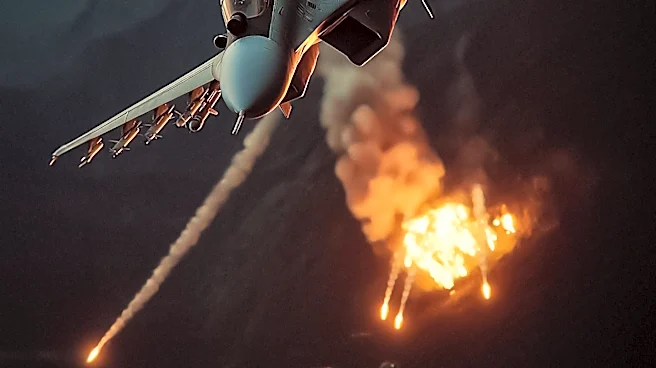
The Trump administration has intensified its airstrike campaign in Somalia, surpassing the number of strikes conducted during President Trump's first term. Recent operations have targeted the port city of Kismayo and the Juba Valley, with AFRICOM providing
limited information on casualties. The increased military activity has raised concerns about transparency and the impact on civilian populations. The administration's approach reflects a broader strategy of sustained military engagement in the region, despite criticisms of its effectiveness and humanitarian consequences.
Why It's Important?
The escalation of airstrikes in Somalia highlights ongoing U.S. military involvement in the region and raises questions about the long-term strategy and objectives. The lack of transparency and accountability in reporting casualties and the impact on civilians is a significant concern for human rights organizations. The situation underscores the challenges of counterterrorism efforts and the potential for unintended consequences, such as increased anti-American sentiment and destabilization. The administration's actions may also influence U.S. relations with African nations and international perceptions of American foreign policy.
What's Next?
The continuation of airstrikes in Somalia is likely, with potential implications for regional stability and U.S. diplomatic relations. Human rights organizations and international bodies may increase pressure on the U.S. to provide more transparency and accountability in its military operations. The situation could also prompt discussions within the U.S. government about the effectiveness and ethics of its counterterrorism strategies. Additionally, the impact on Somali civilians and the potential for increased displacement and humanitarian needs may require international attention and aid.
Beyond the Headlines
The broader implications of the U.S. military's actions in Somalia include the potential for long-term regional instability and the ethical considerations of using military force in complex geopolitical contexts. The situation highlights the need for a comprehensive approach to counterterrorism that addresses underlying causes of conflict and prioritizes human rights. It also raises questions about the role of the U.S. in global security and the balance between military intervention and diplomatic solutions.