







What's Happening?
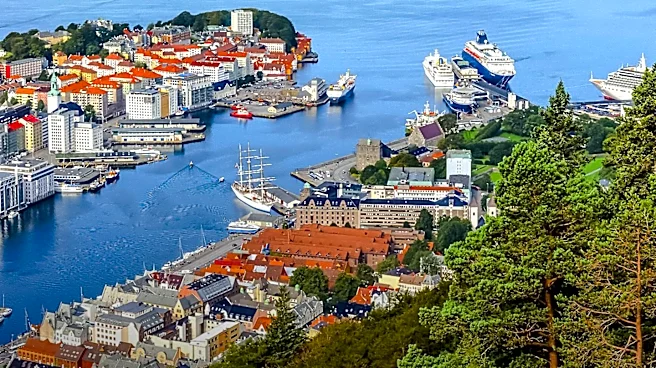
Norway, known for its substantial oil and gas wealth, is strategically investing in fintech and digital infrastructure to prepare for a future beyond hydrocarbons. The country's fintech sector is not focused on addressing financial exclusion but rather
on enhancing efficiency and connectivity in an already advanced digital economy. Norway's economy, projected to reach $625 billion, is diversifying with significant contributions from renewable energy, maritime industries, and technology. The fintech ecosystem in Norway is expanding across payments, open banking, and digital identity, with innovations like Vipps MobilePay and BankID leading the way.
Why It's Important?
Norway's approach to fintech demonstrates how a resource-rich nation can leverage its financial strength to foster innovation and long-term economic resilience. By investing in digital infrastructure, Norway is positioning itself as a leader in fintech, which could serve as a model for other countries seeking to transition from traditional industries to digital economies. The focus on sustainable finance and artificial intelligence reflects a commitment to addressing global challenges such as climate change and economic sustainability. Norway's strategy highlights the potential for fintech to drive economic growth and diversification in resource-dependent economies.
Beyond the Headlines
Norway's fintech investments are part of a broader economic strategy to use current resource wealth to finance future industries. The emphasis on sustainable finance and AI integration suggests a forward-thinking approach to economic development. This strategy not only enhances Norway's competitive advantage but also aligns with global trends towards digital transformation and sustainability. The country's success in fintech could influence international policies and encourage other nations to adopt similar strategies for economic diversification and innovation.