





What's Happening?
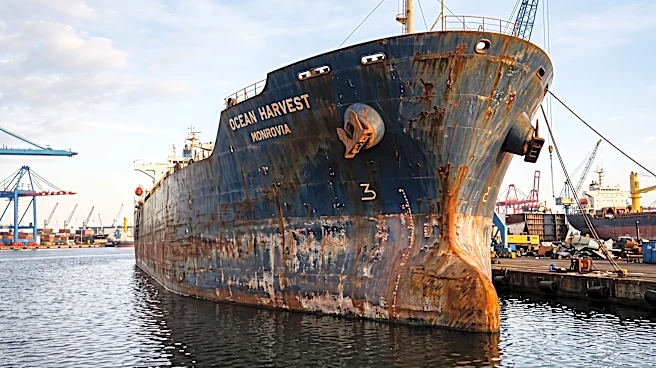
Burevestmarin, a Russian company, is challenging the United States' forfeiture and sale of the crude oil tanker Bella 1 (also known as Marinera), which has reportedly arrived at Chattogram, Bangladesh, for scrapping under the name Era. Lawyers for Burevestmarin, claiming
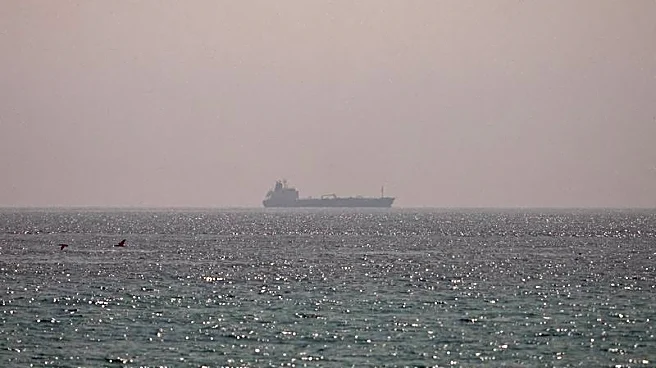
to have acquired the vessel on December 17, 2025, filed urgent court documents in the U.S. on November 4. They argue that the U.S. sale was "economically irrational" and conducted "behind closed doors." The Russian company asserts that the U.S. sold the tanker to GMS, a cash buyer, which then resold it to a Bangladeshi recycler for over $20.7 million on October 14, contradicting U.S. statements that GMS was not authorized to transfer ownership and would retain the vessel during scrapping. The U.S. Coast Guard famously chased and seized the tanker across the Atlantic in late 2025 and early 2026, taking it to Scotland.
Why It's Important?
This legal dispute highlights the complex international implications of maritime law, sanctions enforcement, and asset forfeiture, particularly involving vessels linked to Russian entities. The U.S. seizure and subsequent sale of the Bella 1 underscore efforts to enforce international regulations and potentially sanctions against certain actors. Burevestmarin's challenge raises questions about the transparency and legality of the U.S. government's asset disposal processes, especially when foreign ownership claims are involved. For the U.S., the case tests the robustness of its legal framework for seizing and selling assets deemed to be in violation of its laws or international norms. The controversy also sheds light on the opaque nature of global shipping and the challenges of tracking vessel ownership and transactions, particularly in the context of geopolitical tensions.
What's Next?
The U.S. has opposed Burevestmarin's attempts to seek a temporary restraining order and compensation, arguing that the company delayed filing its case and came to court with "unclean hands," citing its alleged involvement in the vessel's movements despite U.S. Coast Guard orders. The U.S. also pointed to a "threatening email" from Burevestmarin representatives demanding the tanker's return to Russia. The court will need to rule on the validity of Burevestmarin's ownership claim and the legality of the U.S. sale process. Even with the vessel reportedly reaching scrappers, the legal battle could continue over financial compensation and the principles of international maritime law and asset forfeiture. The outcome could set precedents for how the U.S. handles similar cases involving foreign-owned assets in the future.
Beyond the Headlines
This incident goes beyond a simple legal dispute over a ship; it touches upon the broader geopolitical landscape and the use of economic and legal tools in international relations. The U.S. seizure of the Bella 1 and the subsequent legal challenge by a Russian entity reflect the ongoing tensions and the complex ways in which nations assert their authority and enforce their policies globally. The accusations of an "economically irrational sale" and "maneuver behind closed doors" by the Russian owner suggest a narrative of perceived injustice and lack of due process, which could be leveraged in broader diplomatic contexts. The case also highlights the challenges of enforcing sanctions and asset freezes in the maritime sector, where ownership can be obscured through complex corporate structures and flag changes. The ultimate resolution will not only determine the fate of the funds from the sale but also contribute to the evolving jurisprudence on international asset forfeiture and state sovereignty.