







What's Happening?
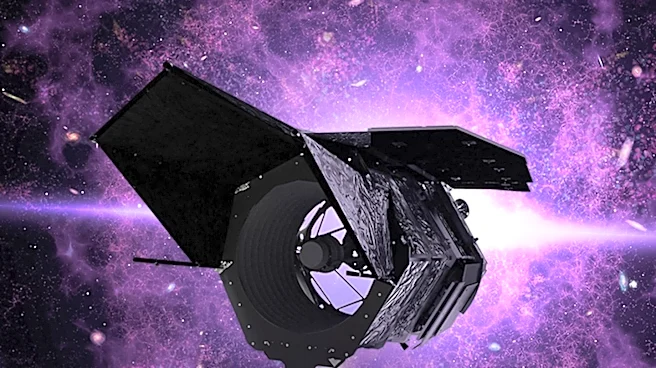
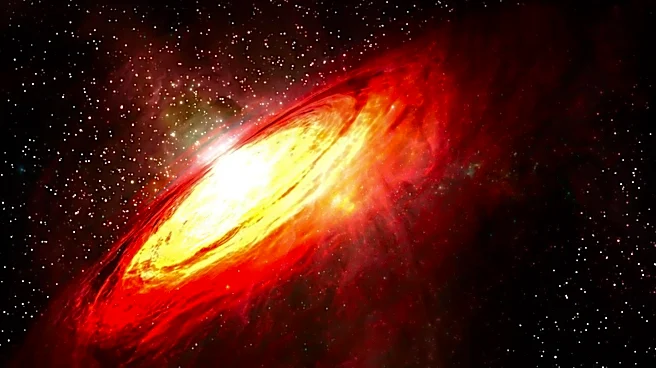
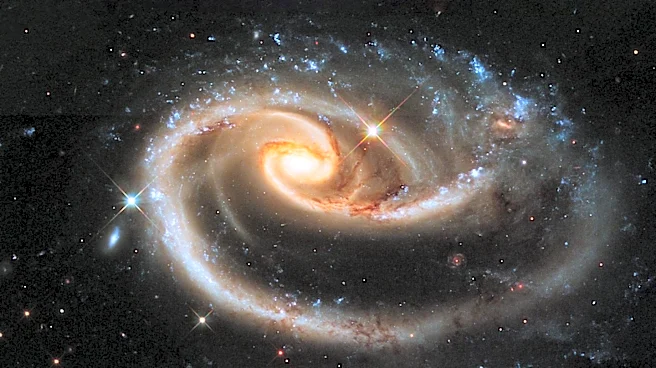
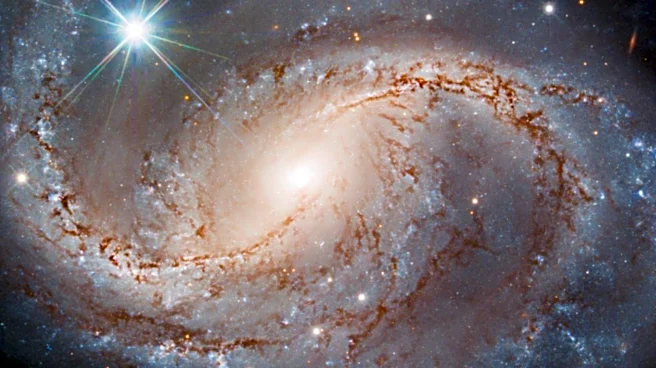
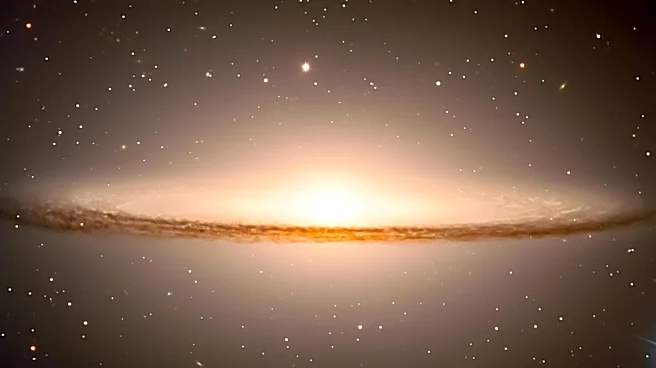
NASA's James Webb Space Telescope (JWST) is celebrating its fourth anniversary with the release of a striking image of Centaurus A, a galaxy located approximately 11 million light-years away. This galaxy's unique structure is the result of a collision
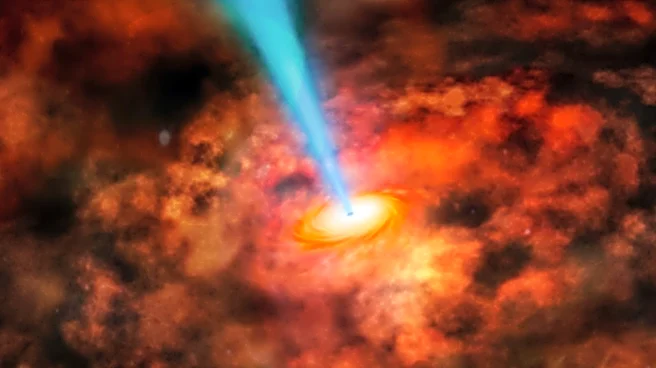
between two galaxies around 2 billion years ago, which provided it with an abundance of gas and dust. These materials have fueled intense star formation and supplied the supermassive black hole at its center, leading to a bright and active galactic nucleus. The JWST, with its advanced infrared capabilities, has been able to peer into the heart of Centaurus A, revealing details previously obscured by dust. This telescope's observations build on the legacy of earlier missions like the Hubble and Spitzer Space Telescopes, offering new insights into the galaxy's structure and the role of its central black hole.
Why It's Important?
The JWST's observations of Centaurus A are significant as they enhance our understanding of galaxy formation and evolution. By examining the interactions between the galaxy's central black hole and its surrounding materials, scientists can gain insights into how such black holes influence star formation and the overall morphology of galaxies. This knowledge is crucial for constructing a more comprehensive history of the universe and understanding the processes that govern galaxy development. The JWST's ability to resolve finer details than its predecessors allows for a deeper exploration of cosmic phenomena, potentially leading to discoveries that could reshape our understanding of the universe.
What's Next?
As the JWST continues its mission, it is expected to provide further insights into the mysteries of Centaurus A and other galaxies. Future observations may help scientists unravel the origins of peculiar structures within these galaxies, such as the S-shaped feature observed in Centaurus A. Additionally, the telescope's findings could inform models of galaxy evolution and the role of supermassive black holes in shaping their environments. The ongoing data collection and analysis will likely lead to new discoveries and a more detailed cosmic history, contributing to the broader field of astrophysics.
Beyond the Headlines
The JWST's exploration of Centaurus A highlights the ethical and philosophical implications of space exploration. As we uncover more about the universe, questions about our place within it and the potential for life beyond Earth become more pressing. The technological advancements represented by the JWST also underscore the importance of international collaboration in scientific endeavors, as the telescope is a joint project of NASA, the European Space Agency, and the Canadian Space Agency. These partnerships are crucial for advancing our understanding of the cosmos and addressing the challenges of space exploration.