





What's Happening?
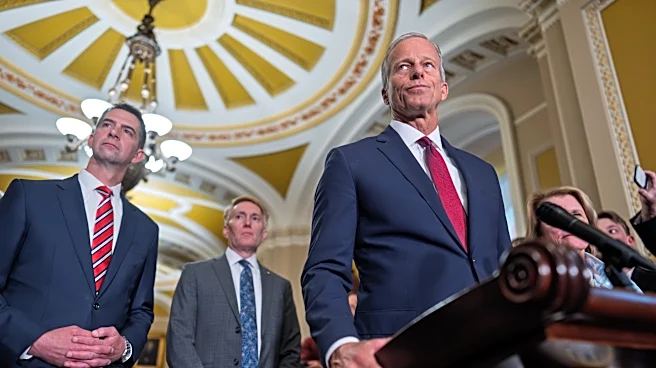
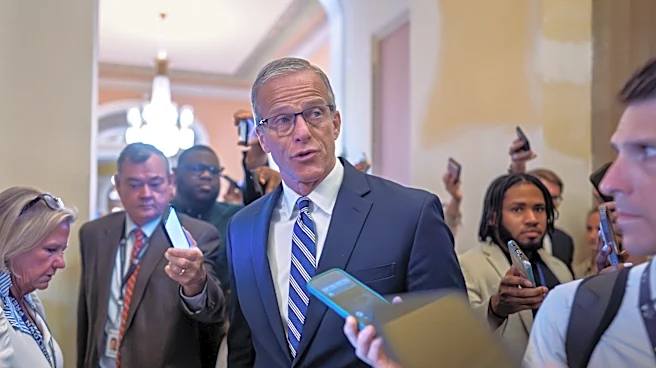
The U.S. Senate is engaged in a prolonged voting session, known as a 'vote-a-rama,' to address funding for immigration enforcement agencies under the Department of Homeland Security. This session is part of a broader effort by Senate Republicans to secure
approximately $70 billion for Immigration and Customs Enforcement (ICE) and Border Patrol. The funding is being pursued through budget reconciliation, a process that allows the Senate to bypass the usual 60-vote threshold and proceed with a simple majority. This move comes after Democrats attempted to block the Justice Department's 'anti-weaponization' fund, which was ultimately defeated in a 49 to 50 vote. The session has seen various amendments proposed, including one to redirect funds to fraud enforcement and another to support law enforcement officers who defended the Capitol on January 6, both of which failed to pass.
Why It's Important?
The outcome of this funding session is significant as it highlights the ongoing partisan divide over immigration policy and government spending. The use of budget reconciliation by Republicans underscores their determination to advance their agenda without Democratic support. This approach could set a precedent for future legislative actions, potentially leading to more unilateral decision-making in Congress. The funding for ICE and Border Patrol is crucial for the continuation of immigration enforcement activities, which have been a contentious issue under President Trump's administration. The failure of amendments aimed at redirecting funds or imposing restrictions reflects the challenges in achieving bipartisan consensus on these matters.
What's Next?
As the vote-a-rama continues, further amendments are expected to be proposed, potentially altering the final funding package. The outcome will likely influence future negotiations between Republicans and Democrats on immigration and other policy areas. Additionally, the decision to fund ICE and Border Patrol through reconciliation may prompt reactions from civil society groups and immigration advocates, who have been critical of the administration's immigration policies. The resolution of this funding issue will also impact the broader fiscal landscape, as it aims to conclude the government funding saga for fiscal year 2026, following previous shutdowns.