








What's Happening?
President Xi Jinping of China has introduced a four-pronged strategy aimed at resolving protracted state-led conflicts in the Horn of Africa. This initiative comes as the region experiences a sharp rise in state-based conflicts, with interconnected crises
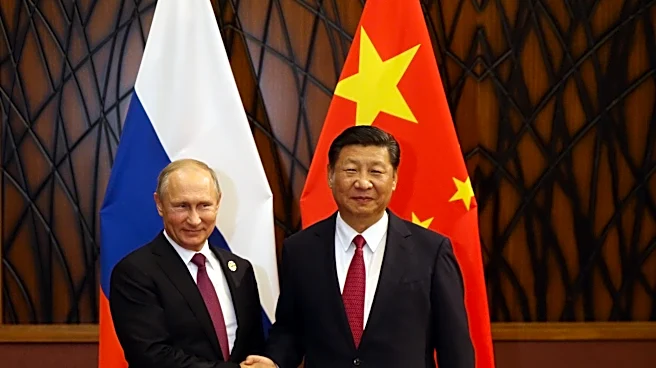
in Ethiopia, Eritrea, Sudan, South Sudan, and Somalia. Traditional peace mechanisms are reportedly proving ineffective, leading to surging humanitarian crises, declining economies, and a decrease in regional peace. President Xi's proposal, made on October 13 during a meeting with Togo's President Faure Essozimna Gnassingbé, emphasizes upholding African leadership, safeguarding equity and justice, ceasing hostilities to build peace, and addressing both immediate symptoms and root causes of conflicts. These principles align with China's long-standing policy of supporting African solutions to African problems and are anchored in its Global Security Initiative (GSI). China is also deploying Special Representative Liu Xianfa and Special Envoy Hu Changchun to conduct shuttle diplomacy in the region.
Why It's Important?
China's diplomatic intervention in the Horn of Africa signifies a growing international effort to stabilize a region critical for global trade routes and security. The proposed 'Four Principles' aim to shift the paradigm of conflict resolution by prioritizing African agency and promoting a comprehensive approach that combines immediate de-escalation with long-term development. This initiative could challenge existing Western influences and diplomatic frameworks in the region, potentially altering geopolitical dynamics. If successful, it could lead to a reduction in humanitarian crises, foster economic stability, and prevent the spread of conflicts, which have broader implications for international security and migration patterns. The emphasis on non-interference and respect for sovereignty also reflects China's broader foreign policy objectives, potentially offering an alternative model for conflict resolution compared to approaches that might involve external sanctions or interventions.
What's Next?
Following President Xi's proposal, China's special envoys are engaging in shuttle diplomacy across Horn of Africa countries to promote the 'Four Principles.' The effectiveness of this initiative will depend on its acceptance and implementation by the warring parties and regional organizations. Djiboutian Foreign Minister Abdoulkader Houssein Omar has already endorsed the principles, indicating potential regional buy-in. Future steps will likely involve China facilitating dialogues and potentially mediating between conflicting parties, focusing on security, development, and governance. The international community, including the African Union and IGAD, will be observing how these principles are applied and whether they can genuinely de-escalate tensions and foster lasting peace. The success or failure of this diplomatic push could influence China's future role in global conflict resolution and its relations with African nations.
Beyond the Headlines
China's proactive diplomatic engagement in the Horn of Africa, a region historically influenced by Western powers, signals a strategic expansion of its global influence. This move goes beyond traditional economic partnerships, positioning China as a significant player in peace and security initiatives. The 'Four Principles' reflect a broader Chinese foreign policy doctrine that emphasizes multilateralism, non-interference, and development-driven stability, potentially offering a counter-narrative to Western-led interventions. This approach could reshape international norms for conflict resolution, particularly in regions where traditional methods have faltered. Furthermore, preventing the Horn of Africa from becoming an 'arena for geopolitical competition' underscores China's intent to safeguard its economic interests in the region, including its Belt and Road Initiative, by promoting stability and reducing external interference. This engagement could also set a precedent for China's involvement in other global hotspots.