



What's Happening?
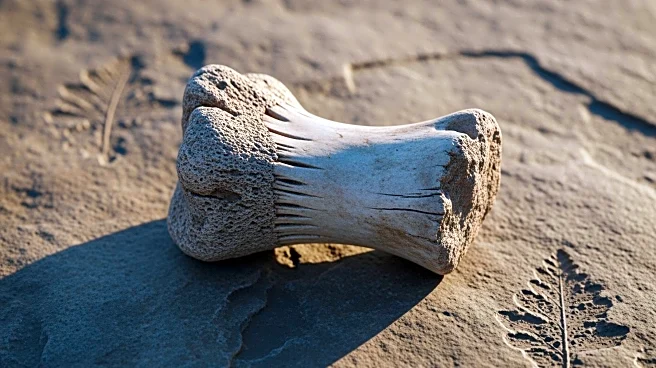
Researchers have successfully analyzed metabolism-related molecules preserved in fossilized bones from animals that lived between 1.3 and 3 million years ago. This groundbreaking study, published in Nature, provides insights into the diets, diseases,
and environments of ancient animals. By examining metabolic signals, scientists reconstructed details about ancient climates, revealing that these environments were significantly warmer and wetter than today. The study also identified signs of diseases, such as sleeping sickness, in a ground squirrel bone from Olduvai Gorge, Tanzania. This research marks a significant advancement in the field of paleontology, as it applies metabolomics—a technique commonly used in modern medical research—to fossils, offering a new perspective on ancient life.
Why It's Important?
This research is significant as it opens new avenues for understanding ancient ecosystems and the evolutionary history of diseases. By identifying metabolites in fossilized bones, scientists can gain insights into the health, diet, and environmental conditions of extinct species. This information is crucial for reconstructing past climates and understanding how ancient animals adapted to their environments. The findings also have implications for modern science, as they provide a deeper understanding of how diseases have evolved over millions of years. This could potentially inform current medical research and public health strategies by highlighting long-term patterns in disease transmission and environmental adaptation.