






What's Happening?
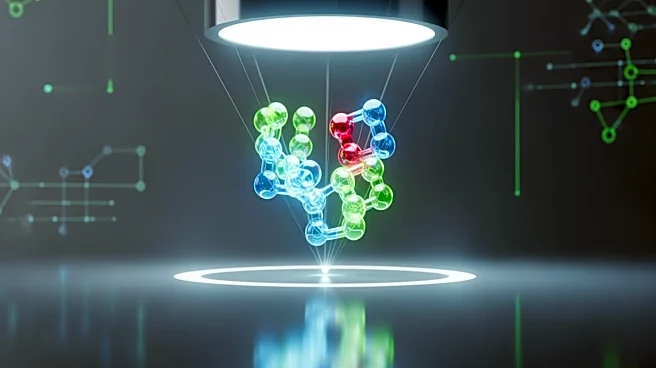
An international team of researchers, led by Professor Kirill Alexandrov from QUT, has successfully engineered AI-generated proteins that function as smart molecular sensors. These proteins activate only upon detecting specific target molecules, offering
a new generation of low-cost biosensors applicable in medicine, environmental monitoring, and biotechnology. The study, published in Nature Biotechnology, demonstrates that these AI-designed protein switches can operate within living bacterial cells and can be linked to electrodes to produce electrical signals, akin to glucose meters. The research challenges traditional beliefs in protein science, showing that sensing proteins do not require large structural changes to function as switches. Instead, subtle changes in protein movement upon target molecule binding are sufficient to activate the proteins. This breakthrough expands the possibilities for protein engineers to design new sensors on demand, potentially supporting portable diagnostic devices and intelligent environmental sensing systems.
Why It's Important?
The development of AI-generated proteins as smart molecular sensors represents a significant advancement in synthetic biology and biotechnology. These sensors could revolutionize various industries by providing cost-effective and efficient solutions for detecting and responding to chemical signals. In medicine, they could lead to the creation of portable diagnostic devices, enhancing patient care and monitoring. Environmental monitoring could benefit from more accurate and responsive sensing systems, aiding in pollution control and ecosystem management. The ability to design protein sensors on demand opens new avenues for research and development, potentially accelerating innovation in biotechnology. This technology also provides insights into natural protein regulation, offering a powerful strategy for designing biosensors that could have widespread applications in healthcare, environmental science, and industrial processes.
What's Next?
The research team plans to further explore the applications of these AI-generated protein sensors in various fields. Future studies may focus on optimizing the sensors for specific targets and expanding their use in living cells. Collaborations with industry partners could lead to the development of commercial products based on this technology, such as portable diagnostic devices and environmental monitoring systems. The team may also investigate the integration of these sensors into engineered cells that can intelligently respond to chemical signals, paving the way for advanced synthetic biology applications. As the technology matures, it could attract interest from healthcare providers, environmental agencies, and biotechnology companies seeking innovative solutions for sensing and diagnostics.