



What's Happening?
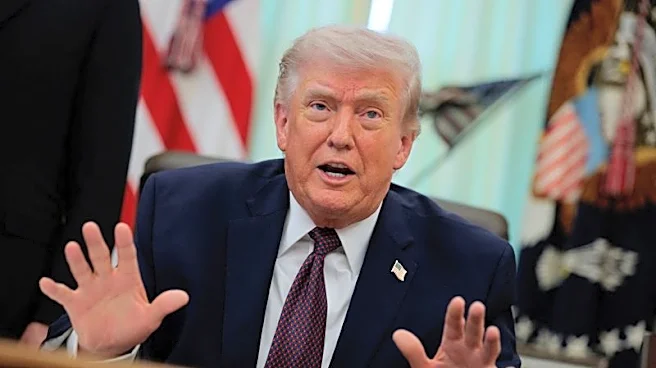
The European Union and the United States are facing uncertainty in their trade relations following the introduction of a new 10% global tariff by President Trump, with a potential increase to 15%. This development has led the European Parliament to pause
the ratification of the 'Agreement on Reciprocal, Fair, and Balanced Trade' between the EU and the U.S. The uncertainty surrounding these tariffs is causing challenges for shippers and logistics providers, as they struggle to make long-term decisions for their supply chains. The temporary nature of the tariff, lasting only 150 days under Section 122 unless extended by Congress, adds to the unpredictability. The EU is also exploring new trade relationships, having concluded major agreements with Mercosur countries and India, which could create significant trading areas and reduce reliance on the U.S.
Why It's Important?
The evolving trade policies between the EU and the U.S. have significant implications for global trade dynamics. The uncertainty introduced by the new tariffs affects not only European companies but also U.S. importers, who are unable to make stable long-term decisions. This situation could lead to shifts in global supply chains and trade routes, as companies seek to mitigate risks associated with tariff changes. The EU's pursuit of new trade agreements with Mercosur and India highlights a strategic pivot towards diversifying trade partnerships, potentially reducing dependency on the U.S. market. These developments could reshape global trade patterns, impacting industries such as automotive, mechanical engineering, and pharmaceuticals.
What's Next?
Further discussions between the EU and the Trump administration are expected to clarify the future of the trade agreement and the application of the new tariffs. The EU's agreements with Mercosur and India are poised to enter provisional force, potentially boosting EU exports and creating new opportunities for logistics providers. The outcome of these negotiations and the ratification process will be closely watched by stakeholders in the logistics and manufacturing sectors, as they navigate the complexities of international trade in a volatile environment.
Beyond the Headlines
The current trade tensions underscore the broader geopolitical shifts and the need for countries to adapt to a changing global order. The EU's efforts to strengthen alliances with regions like Latin America and India reflect a strategic move to enhance economic resilience and reduce vulnerability to unilateral trade policies. This situation also highlights the importance of multilateral trade agreements in promoting stability and growth in the global economy.