


What's Happening?
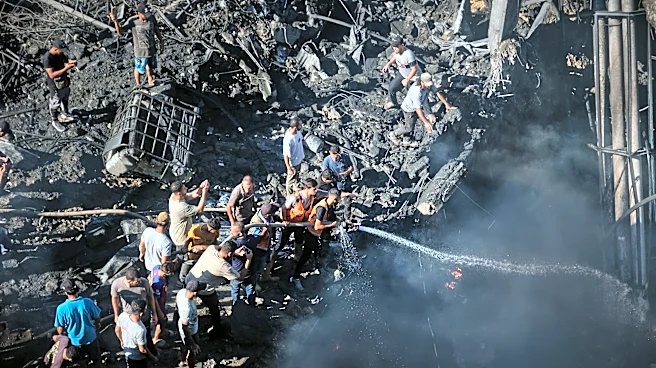
A coalition of progressive rabbis has launched a public campaign, 'Rabbis for Block the Bombs,' to urge Congress to support H.R. 3565, also known as the 'Block the Bombs Act.' This proposed legislation calls for a partial arms embargo on Israel, specifically
targeting the sale and transfer of seven types of offensive weapons. These include BLU-109 bunker-busting bombs, MK80 series bombs, GBU-39 small-diameter bomb variants, Joint Direct Attack Munitions, SPICE gliding bomb assemblies, 120-mm tank ammunition, and 155-mm artillery ammunition, including white phosphorus munitions. The coalition, which launched on August 23, has garnered 92 signatories among Jewish clergy. Their mission statement, guided by Jewish values such as 'pikuah nefesh' (the obligation to save lives) and 'b’tzelem E-lohim' (the belief that all humans are made in the image of the Divine), expresses horror at the ongoing assaults in Gaza and the West Bank and seeks to end U.S. complicity in what they describe as excessive violence by the Israeli military. Groups supporting this initiative include Jewish Voice for Peace (JVP), Center for Jewish Nonviolence, IfNotNow, Jews for Racial & Economic Justice, New Jewish Narrative, and Rabbis for Ceasefire. These groups have faced criticism and are widely disavowed by mainstream Judaism due to their anti-Israel campaigning and support for the BDS movement.
Why It's Important?
This initiative is significant as it represents a growing, albeit controversial, movement within certain segments of the U.S. Jewish community to influence U.S. foreign policy regarding Israel. The 'Block the Bombs Act' directly challenges the long-standing military aid relationship between the U.S. and Israel, which has been a cornerstone of U.S. policy in the Middle East. If successful, even partially, it could set a precedent for future restrictions on arms sales to allies, potentially altering the dynamics of international military support. The campaign highlights a deep ideological divide within the Jewish community itself, with progressive groups advocating for policies that mainstream Jewish organizations often oppose. This internal conflict could impact political lobbying efforts and public discourse surrounding U.S.-Israel relations. Furthermore, the focus on specific weapon types underscores concerns about the humanitarian impact of military actions in conflict zones, bringing ethical considerations to the forefront of legislative debates. The involvement of religious leaders adds a moral dimension to the political discussion, potentially swaying public opinion and pressuring lawmakers to reconsider existing policies.
What's Next?
The immediate next step for the 'Rabbis for Block the Bombs' coalition is to continue recruiting more Jewish clergy and lobbying members of Congress to support H.R. 3565. Their efforts will likely involve direct engagement with lawmakers, public awareness campaigns, and potentially organizing demonstrations to amplify their message. The bill's progress will depend on the level of support it garners within Congress, particularly among members who may be sensitive to humanitarian concerns or shifting political sentiments. Major stakeholders, including pro-Israel lobbying groups, will likely counter these efforts, emphasizing the strategic importance of U.S. military aid to Israel for regional stability and security. The debate surrounding this bill could intensify, leading to increased public discussion and media coverage of U.S. foreign policy in the Middle East. Depending on the political climate and the evolving situation in the region, the bill could either gain traction or face significant opposition, potentially leading to amendments, delays, or its eventual failure to pass. The coalition's success will also be measured by its ability to broaden its support base beyond its current signatories and influence a wider segment of the U.S. population.
Beyond the Headlines
The 'Block the Bombs Act' campaign delves into deeper implications beyond immediate policy changes, touching upon the evolving identity of Jewish political activism in the U.S. It highlights a generational and ideological schism within the Jewish community, where a segment is increasingly critical of Israeli government policies and U.S. support for them. This shift challenges the traditional narrative of unified Jewish support for Israel and could lead to a re-evaluation of how Jewish voices are represented in political discourse. Ethically, the campaign raises questions about the moral responsibility of arms-exporting nations and the accountability of religious institutions in advocating for human rights in international conflicts. Legally, the bill, if enacted, could face challenges regarding its scope and potential impact on existing defense agreements. Culturally, the public stance of these progressive rabbis could influence how younger generations of American Jews perceive their connection to Israel and their role in advocating for social justice. This movement could also inspire similar initiatives from other religious or ethnic groups concerned about U.S. foreign policy, potentially leading to a broader re-examination of America's role in global conflicts and its arms trade practices.