




What's Happening?
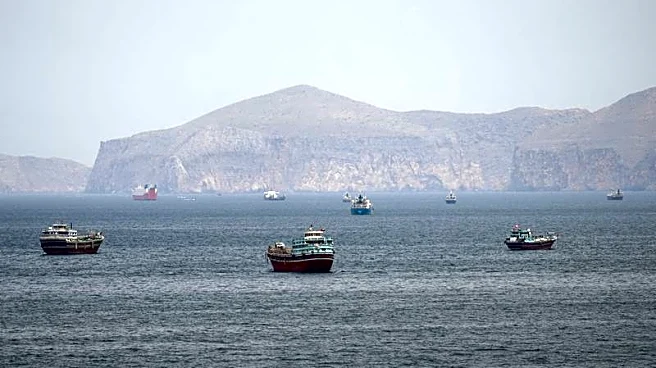
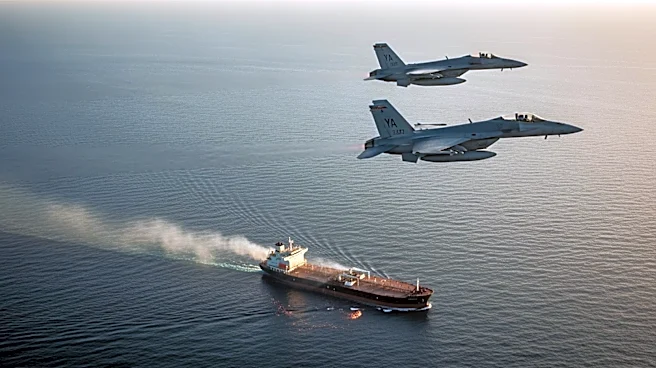
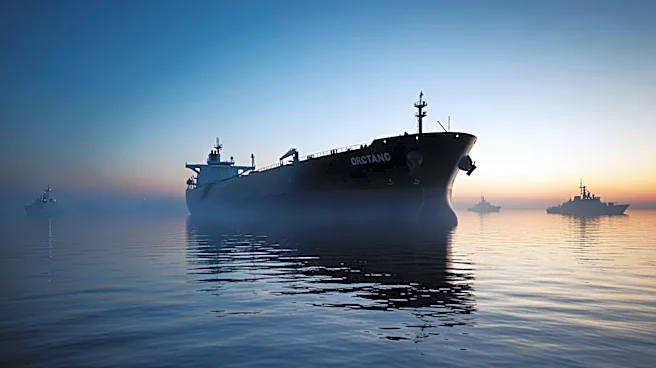
U.S. Central Command has disabled two Iranian-flagged tankers in the Gulf of Oman using Navy fighter jets. The F/A-18 Super Hornet from USS George H.W. Bush targeted the tankers' stacks with precision munitions, preventing them from reaching Iranian ports.
This action is part of a broader U.S. strategy to enforce a blockade on vessels entering or leaving Iran, which began in April. The blockade aims to restrict Iran's ability to use tankers for floating storage and continue oil production. The recent strikes are part of a new operational pattern that avoids the need for boarding and seizure, reducing risks associated with disabling vessels.
Why It's Important?
The disabling of Iranian tankers by U.S. forces is a significant development in the enforcement of sanctions against Iran. By preventing tankers from reaching Iranian ports, the U.S. aims to limit Iran's oil export capabilities, impacting its economy and geopolitical influence. The use of precision strikes as a resource-efficient alternative to traditional interdiction methods highlights the evolving nature of military operations in the region. This approach may influence future U.S. military strategies and international maritime security policies, as it demonstrates a commitment to maintaining pressure on Iran while minimizing direct confrontation.
What's Next?
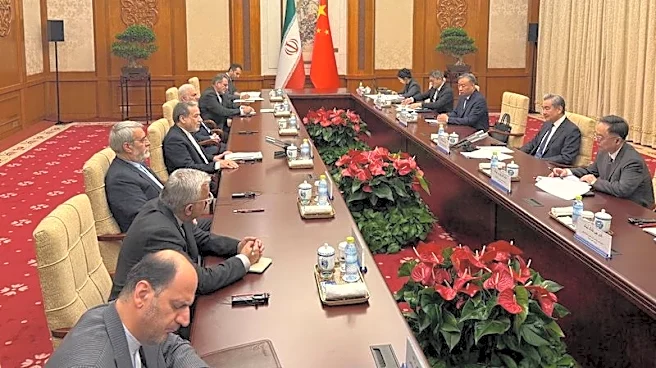
The U.S. is likely to continue its blockade and enforcement actions in the Gulf of Oman, with potential implications for international shipping and oil markets. The situation may lead to increased diplomatic efforts to address the underlying tensions between the U.S. and Iran. The international community will be watching closely for any changes in Iran's response or adjustments to U.S. military strategies. The ongoing blockade could also affect global oil prices and supply chains, prompting discussions on energy security and geopolitical stability.