
What's Happening?
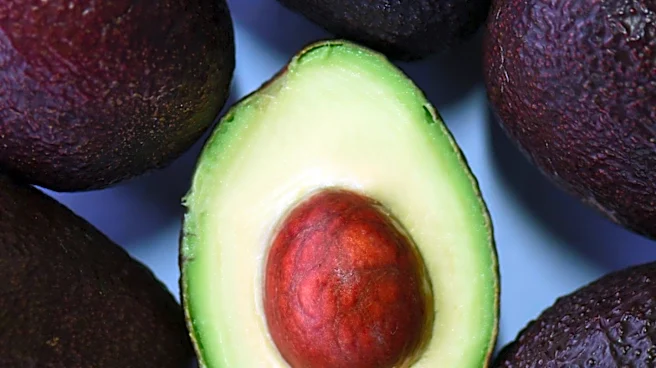
Researchers from the Smithsonian's National Museum of Natural History and Texas A&M University have discovered genetically distinct avocados in Nicaragua. These avocados, which are different from commercially
grown varieties, have been shaped by ancient migration patterns and traditional agricultural practices. The study, published in the journal Plants, People, Planet, reveals that these avocados are the result of hybridization between native varieties and those brought by migrating populations from South America around 5,000 years ago. The research highlights the rich genetic diversity of avocados in Central America, which could be crucial for conserving commercial avocado plants vulnerable to disease.
Why It's Important?
The discovery of genetically distinct avocados in Nicaragua is significant for the global avocado industry, which relies heavily on a single variety, the Hass avocado. This lack of genetic diversity makes commercial avocados susceptible to diseases and environmental changes. By tapping into the genetic diversity of Nicaraguan avocados, scientists and farmers could develop more resilient avocado varieties, ensuring the sustainability of this multibillion-dollar industry. Additionally, the study underscores the importance of preserving traditional agricultural practices and local biodiversity, which play a critical role in maintaining genetic diversity.
Beyond the Headlines
The findings also highlight the interconnectedness of ancient human populations and their agricultural practices. The movement of avocado varieties across regions reflects broader patterns of migration and cultural exchange in ancient times. This research not only contributes to our understanding of avocado genetics but also provides insights into the historical interactions between human societies and their environments. Preserving this genetic diversity is not only vital for agriculture but also for understanding the cultural heritage and ecological history of the region.