



What's Happening?
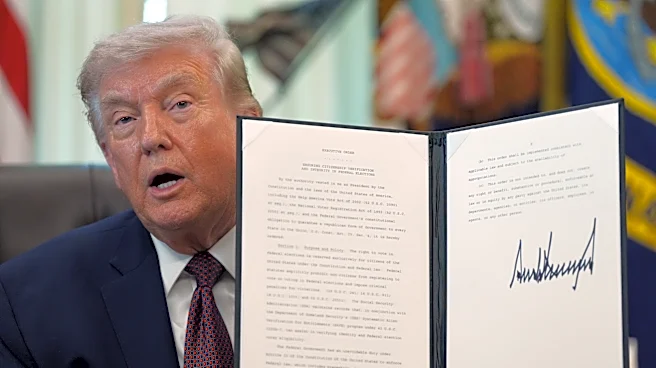
President Trump has signed an executive order directing the creation of a national voter file and restricting mail-in ballots, a move that is likely unconstitutional. The order instructs the Department of Homeland Security and the Social Security Administration
to compile a list of verified U.S. citizens eligible to vote. It also directs the United States Postal Service to require states to notify the agency of voters intending to receive mail-in ballots. Critics argue that the order oversteps presidential authority, as the U.S. Constitution grants states the power to set election rules. Legal experts predict that the order will face significant legal challenges.
Why It's Important?
The executive order represents a significant attempt by the Trump administration to assert federal control over elections, based on unfounded claims of voter fraud. If implemented, the order could disrupt state-run election processes and disenfranchise voters who rely on mail-in ballots. The move raises important constitutional questions about the balance of power between federal and state governments in election administration. The legal challenges that are expected to follow could have far-reaching implications for the integrity and accessibility of U.S. elections.
What's Next?
Democratic officials in states like Oregon and Arizona have announced plans to challenge the executive order in court. The legal battles that ensue will likely determine the order's viability and could set important precedents regarding federal authority over elections. The outcome of these challenges will be closely watched, as they could impact the administration of the upcoming midterm elections and the future of mail-in voting in the U.S.