








What's Happening?
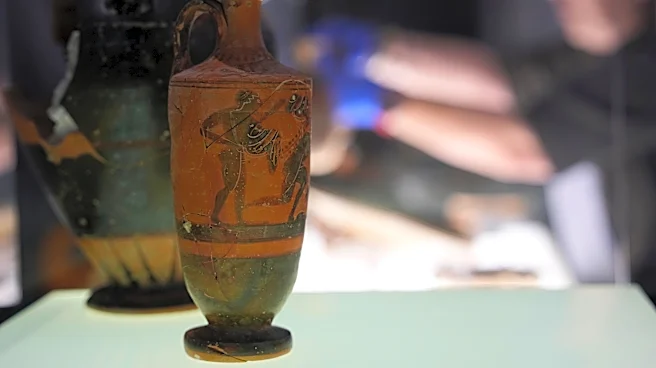
Israel has returned 22 ancient Greek artifacts to Greece, marking the first such repatriation between the two countries. The artifacts, dating from the 8th to 4th centuries BCE, were discovered in warehouses in central Israel during a 2020 investigation
into suspected illegal antiquities trading. The handover ceremony took place at the National Archaeological Museum in Athens, following the completion of legal proceedings in Israel and the confiscation of the objects. Among the returned items are ceramic vessels decorated with motifs influenced by ancient Near Eastern art, as well as pieces featuring black-figure and red-figure painting styles depicting scenes from Greek mythology. The investigation, a joint operation by the Israel Antiquities Authority, Israel Police, and the Israel Tax Authority, raided galleries, warehouses, and apartments across the Greater Tel Aviv area, uncovering thousands of archaeological objects from various countries.
Why It's Important?
This repatriation signifies a crucial step in international cooperation to combat the illicit trade of cultural heritage, an issue with global implications including for the U.S. The illegal antiquities trade is often linked to organized crime, terrorism financing, and money laundering, making its disruption vital for global security and cultural preservation. The return of these artifacts underscores the shared responsibility of nations to protect historical objects and their narratives, which are integral to understanding human history and national identities. For the U.S., which often sees illegally trafficked artifacts enter its art markets, this event highlights the importance of stringent import regulations and international partnerships to prevent the flow of looted cultural property and support ethical collecting practices.
What's Next?
The successful repatriation is expected to foster deeper cooperation between Israeli and Greek law enforcement agencies in protecting cultural heritage. Both countries plan to sign a memorandum of understanding in the near future to formalize their collaboration. This will likely include expanded intelligence sharing, joint enforcement workshops, and efforts to identify looted artifacts and trace smuggling routes. Such initiatives could serve as a model for other nations grappling with the illegal antiquities trade, potentially leading to more frequent and coordinated international efforts to return cultural property to its countries of origin. The ongoing investigation into the broader network of illegal antiquities trading in Israel may also lead to further discoveries and repatriations.
Beyond the Headlines
The act of returning these antiquities carries significant moral and symbolic weight, emphasizing that cultural heritage transcends national borders and belongs to humanity. As Israeli Ambassador Pninat Yanay noted, removing an ancient object from its original setting interrupts its historical narrative; its return allows that story to continue. This event highlights the ethical imperative for nations to rectify historical wrongs related to cultural appropriation and illicit trade. It also underscores the role of archaeology not just as an academic discipline, but as a tool for understanding national identity and fostering international diplomacy. The collaboration between Israel and Greece in this matter sets a precedent for how countries can work together to preserve shared human heritage, promoting mutual trust and respect in a world often divided by political and cultural differences.