

What's Happening?
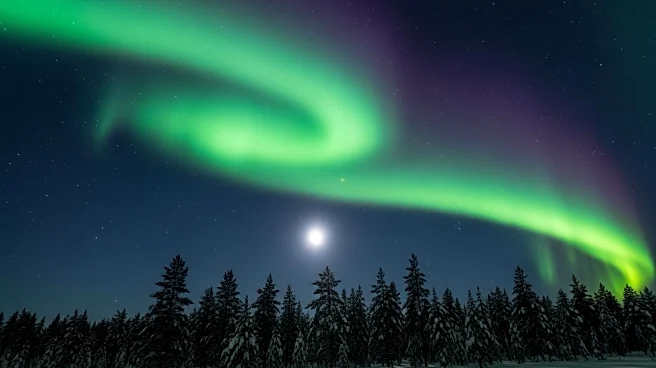
On Christmas Eve, December 24, 2025, skywatchers in parts of North America and Europe may have the opportunity to witness elevated aurora activity due to fast solar winds and a potential glancing influence from a coronal mass ejection (CME). The Space
Weather Prediction Center has indicated that these conditions could enhance the visibility of the northern lights, particularly at higher latitudes. This celestial event coincides with other notable astronomical occurrences, including a waxing crescent moon, visible planets such as Saturn and Jupiter, and the International Space Station (ISS) flybys. The ISS is expected to be visible as a bright, silent moving star in the early morning hours over major cities like New York, Chicago, and Toronto.
Why It's Important?
The potential for increased aurora activity on Christmas Eve presents a unique opportunity for skywatchers and astronomy enthusiasts to experience a natural light show. This event highlights the dynamic nature of space weather and its impact on Earth's atmosphere. The visibility of the northern lights can attract tourism and interest in regions where they are most visible, such as Alaska and northern Canada. Additionally, the conjunction of multiple celestial events, including the ISS flyby and visible planets, offers educational and recreational opportunities for the public to engage with astronomy. The event underscores the importance of space weather forecasting in predicting and understanding geomagnetic phenomena.
What's Next?
As the night progresses, observers are encouraged to check real-time updates from the Space Weather Prediction Center and NASA's Spot the Station tool for precise viewing times and locations. The aurora activity is expected to continue through the night, with the best viewing opportunities in areas with clear skies and minimal light pollution. The ongoing solar activity may lead to further geomagnetic events, prompting continued monitoring by space weather agencies. Enthusiasts and photographers are likely to share their experiences and images, contributing to a broader appreciation and understanding of these natural phenomena.