







What's Happening?
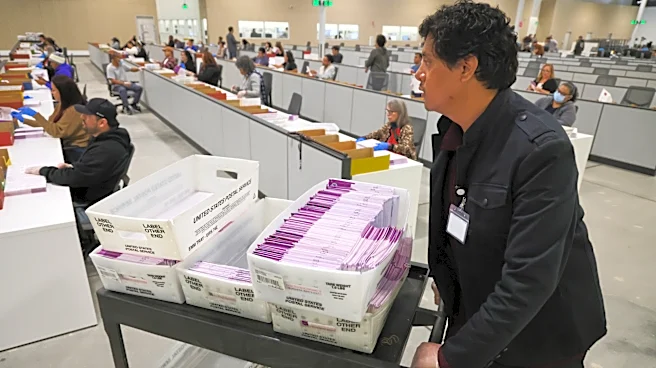
The Office of Personnel Management (OPM) is experiencing significant delays in processing retirement calculations for postal workers and rural carriers. This issue arises from the need to adjust retirement benefits following recent union contract settlements,
which have introduced new wage rates and back pay adjustments. Affected retirees, like Allen, have reported that their annuities were calculated based on outdated wage rates, necessitating recalculations to reflect the new contract terms. Despite notifying OPM, many retirees have not seen timely adjustments, with some cases taking up to a year to resolve. The backlog is attributed to the high volume of cases and the complexity of processing multiple contract settlements simultaneously.
Why It's Important?
The delays in processing retirement calculations have significant implications for postal workers and rural carriers, who rely on accurate and timely pension adjustments for financial stability. The backlog highlights systemic challenges within OPM, including resource constraints and the need for more efficient processing systems. This situation underscores the importance of robust administrative processes in managing federal retirement benefits, as delays can lead to financial uncertainty for retirees. Additionally, the temporary suspension of employer contributions to the Federal Employees Retirement System by the Postal Service, aimed at conserving cash, adds another layer of complexity and concern for current and future retirees.
What's Next?
OPM is expected to continue addressing the backlog of retirement calculations, but the process may take time due to the volume of cases. The Postal Service's decision to suspend employer contributions could prompt further scrutiny and potential policy responses to ensure the financial security of federal retirees. Stakeholders, including unions and retiree associations, may advocate for expedited processing and additional resources for OPM to manage the workload more effectively. The situation may also lead to discussions on improving the efficiency and transparency of federal retirement benefit administration.