

What's Happening?
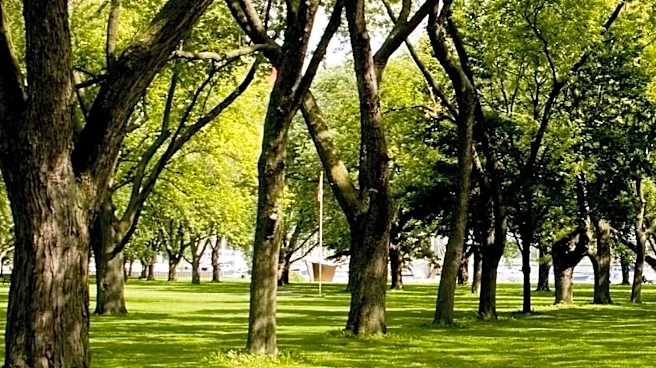
Several neighborhoods in Worcester, Massachusetts, particularly dense, working-class areas like Bell Hill and Vernon Hill, are experiencing a significant shortage of trees. This lack of tree canopy contributes to an intense urban heat island effect, where
temperatures are notably higher compared to greener parts of the city. Despite thousands of trees being planted over the last decade, Worcester has invested approximately one-third less in urban forestry than other cities of comparable size and population, according to the city’s Urban Forestry Master Plan. Residents, such as Annette Lopez, express a desire for more trees to enhance neighborhood pride and mitigate environmental impacts. The city's tree inventory increased by 49% between 2005 and 2022, from 15,486 to 23,137 trees, partly to compensate for losses due to an Asian longhorned beetle infestation and property owners removing trees they consider nuisances.
Why It's Important?
The uneven distribution of urban trees in Worcester highlights environmental justice concerns, as lower-income and working-class neighborhoods disproportionately bear the brunt of urban heat and poorer air quality. Grace Sliwoski, an associate director at the Regional Environmental Council, notes a correlation between areas with limited open space and tree canopy and higher rates of asthma and surface land temperatures. This disparity affects public health and quality of life for residents in these areas. The removal of trees by some property owners, often to create additional parking or avoid maintenance, further complicates efforts to expand the urban canopy. The issue underscores the challenge of balancing individual property rights with broader community and environmental benefits, particularly in densely populated urban settings.
What's Next?
City officials and local environmentalists are actively working to address the inequitable distribution of trees. Efforts include educating residents and landlords about the benefits of trees through bilingual materials and offering free tree plantings on private property, supported by grants from the Massachusetts Department of Conservation and Recreation. The New England Botanic Garden at Tower Hill has successfully planted hundreds of trees through these initiatives. Worcester's chief sustainability officer, John Odell, acknowledges the difficulty of this task, citing limited funding and infrastructure challenges like utility lines and underground pipes that hinder street tree planting. The city has allocated over $930,000 in American Rescue Plan Act (ARPA) funding over the past two years for new trees and maintenance, focusing on areas most affected by urban heat, indicating a continued commitment to improving tree equity.
Beyond the Headlines
The tree disparity in Worcester reflects a broader national issue of environmental inequality, where historical urban planning and economic factors have led to significant differences in green infrastructure between affluent and less affluent neighborhoods. This situation can perpetuate health disparities, as residents in hotter, less green areas may face increased risks of heat-related illnesses and respiratory problems. Beyond immediate environmental benefits, a robust urban tree canopy can foster community pride and social cohesion, as expressed by residents like Annette Lopez. The challenge extends beyond simply planting trees to ensuring their long-term survival through proper care and maintenance, which requires sustained community engagement and funding. The ongoing efforts in Worcester could serve as a model for other cities grappling with similar environmental justice issues, emphasizing the importance of collaborative approaches involving city government, non-profits, and residents.