
What's Happening?
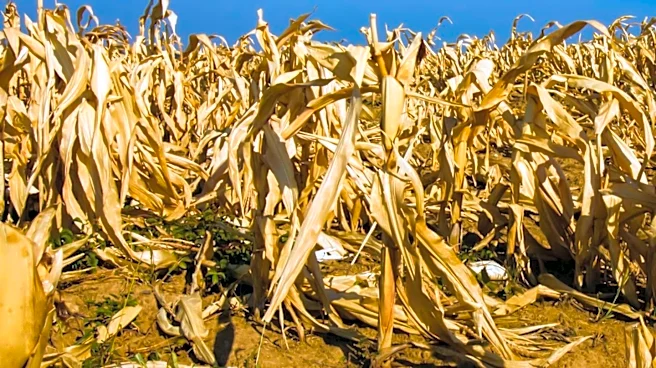
Expana, a commodity data firm, has significantly lowered its forecast for the European Union's maize harvest for the 2026/27 season due to adverse weather conditions. The firm cut its maize production estimate by 4.6 million metric tons, bringing the total
to 49.1 million tons, which is a 13.9% decrease from the previous season. The reduction is attributed to hot and dry conditions that have severely affected crop prospects in France and other key producing regions such as Germany, Benelux, Central Europe, and Poland. The current forecast places the EU maize output 19% below its five-year average, nearing the poor harvest levels of 2007/08 and 2003/04. While Romania and Bulgaria are expected to achieve satisfactory yields, the overall outlook remains bleak. Additionally, Expana has also reduced its soft wheat production forecast by 1.5 million tons to 126.8 million tons, citing disappointing yields in Hungary, the Czech Republic, Benelux, and Germany.
Why It's Important?
The reduction in maize and wheat forecasts by Expana highlights the significant impact of climate conditions on agricultural productivity in the European Union. This development could have far-reaching implications for global food supply and prices, as the EU is a major player in the international grain market. The decreased output may lead to increased prices for maize and wheat, affecting food manufacturers and consumers worldwide. Furthermore, the situation underscores the vulnerability of agriculture to climate change, emphasizing the need for sustainable farming practices and technologies to mitigate such impacts. The agricultural sector, policymakers, and international trade partners will need to address these challenges to ensure food security and economic stability.
What's Next?
As the EU grapples with reduced crop yields, stakeholders may need to explore alternative sources of maize and wheat to meet demand. This could involve increasing imports from other regions or investing in agritech solutions to enhance crop resilience against climate extremes. Policymakers might also consider implementing measures to support affected farmers and stabilize the market. The situation may prompt further discussions on climate adaptation strategies within the EU and among international agricultural bodies.