



What's Happening?
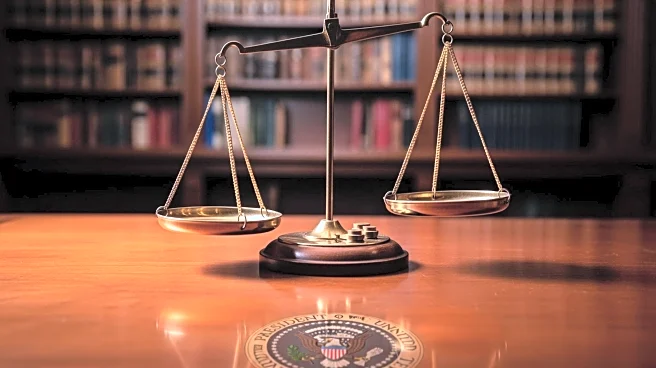
President Trump has raised questions about the validity of President Joe Biden's pardons that were signed using an autopen, claiming they are void. This has sparked a debate over the constitutional foundations of presidential pardoning. Legal experts,
however, have largely dismissed these claims, emphasizing that the form of a president's signature does not affect the validity of clemency. The Office of Legal Counsel had previously established in a 2005 memorandum that a president can authorize a subordinate to use an autopen for signing official documents. This legal foundation supports the use of mechanical signatures for presidential acts, including pardons, as long as the president has authorized the action.
Why It's Important?
The controversy over Biden's autopen-signed pardons highlights the tension between political maneuvering and established constitutional powers. Presidential clemency is historically considered final and immune to reversal, and the current debate tests the durability of these powers. The issue is significant as it could set a precedent for future administrations to challenge or reinterpret constitutional powers for political purposes. Legal scholars argue that the validity of clemency is based on presidential intent and authorization, not the mechanics of the signature, underscoring the broad authority vested in the presidency.
What's Next?
While the legal validity of Biden's pardons remains intact, the political debate is likely to continue. Congressional inquiries may explore the broader implications of presidential authority and decision-making processes. However, these investigations are unlikely to alter the legal standing of the pardons. Future administrations may attempt to challenge such pardons symbolically, but legal experts believe these efforts will ultimately be unsuccessful. The ongoing discourse reflects a broader examination of executive powers and the potential for political actors to push the boundaries of established norms.