






What's Happening?
Laurel College of Technology has purchased the Pyramid building, a former part of the Praise the Lord (PTL) theme park in Fort Mill, South Carolina, for over $2.6 million. This acquisition marks a new chapter for the long-vacant structure, which previously
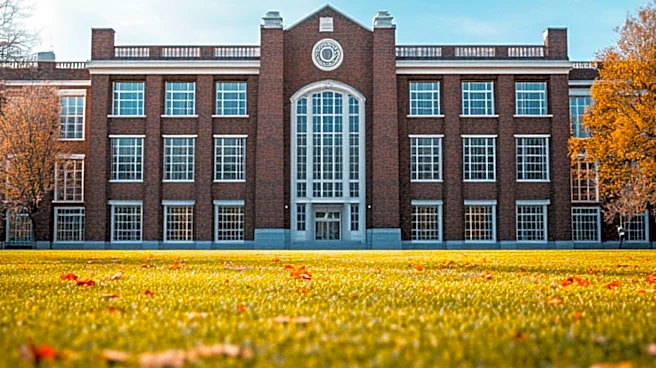
served as the headquarters for Laura Ashley after its PTL days. The college plans to transform the building into a new campus, expanding its educational offerings. Laurel College already operates a campus on Patricia Lane in Fort Mill, providing career and technical programs. The new campus aims to broaden these opportunities, particularly in skilled trades and healthcare fields such as practical nursing, cardiovascular technology, and respiratory therapy. Dr. Douglas Decker, the school's chief operating officer, noted the building's unique architecture as a suitable learning environment. The college anticipates opening the new campus in 2027, following necessary renovations and permit approvals.
Why It's Important?
This development is significant for Fort Mill and the broader York County region, addressing both the revitalization of a prominent, long-empty landmark and the critical need for workforce development. The former PTL Pyramid building has been a visible, unused structure for years, and its conversion into an educational institution will contribute to urban renewal and economic activity in the area. More importantly, Laurel College's expansion into healthcare and skilled trades directly responds to growing demands in South Carolina. York County, for instance, currently has a disproportionately low percentage of the state's physicians and registered nurses. By offering programs in these high-demand sectors, the new campus will help train a local workforce, potentially alleviating shortages and supporting the expansion of healthcare providers in the county. This initiative benefits students seeking relevant career paths and employers in need of skilled professionals, fostering regional economic growth and improving community services.
What's Next?
Laurel College of Technology is moving forward with plans to renovate the newly acquired Pyramid building, with an anticipated opening for the new campus in 2027. This timeline suggests that the coming months will involve significant construction and regulatory processes, including securing necessary permits. The college will likely focus on developing curriculum and recruiting faculty for the expanded programs in skilled trades and healthcare. Local stakeholders, including residents and businesses, will be observing the progress of the renovations and the impact of the new campus on the community. The expansion is expected to attract more students to Fort Mill, potentially boosting the local economy through increased student spending and job creation. Furthermore, the success of this new campus could influence future educational and development projects in the region, particularly those aimed at addressing workforce gaps in critical sectors.
Beyond the Headlines
The repurposing of the former PTL Pyramid building carries deeper implications beyond its immediate educational and economic benefits. The PTL theme park, founded by Jim and Tammy Faye Bakker, holds a complex place in American cultural and religious history, marked by both its initial popularity and subsequent scandal. The transformation of one of its iconic structures into a modern educational facility symbolizes a shift from a controversial past to a future-oriented community asset. This project highlights the potential for adaptive reuse of large, distinctive properties, offering a model for other communities grappling with underutilized historical sites. Ethically, it represents an investment in human capital and community well-being, moving away from a site once associated with entertainment and religious broadcasting to one focused on practical skills and public service, particularly in healthcare. This transition could foster a renewed sense of purpose and identity for the area, demonstrating how historical spaces can be reimagined to serve contemporary societal needs.